
Medical team · Mexico City
3 physicians, 1 nurse, 1 coordinator. Named to you in writing before you pay.
This page shows who is in the room at every hour of the 7 days, what each credential means, how to check a Mexican medical licence yourself, and the 5 things we will not do in a dosing room. Names, specialties and cédula numbers go to every family in the screening pack, because a name on a website is not verification. A registry lookup is.
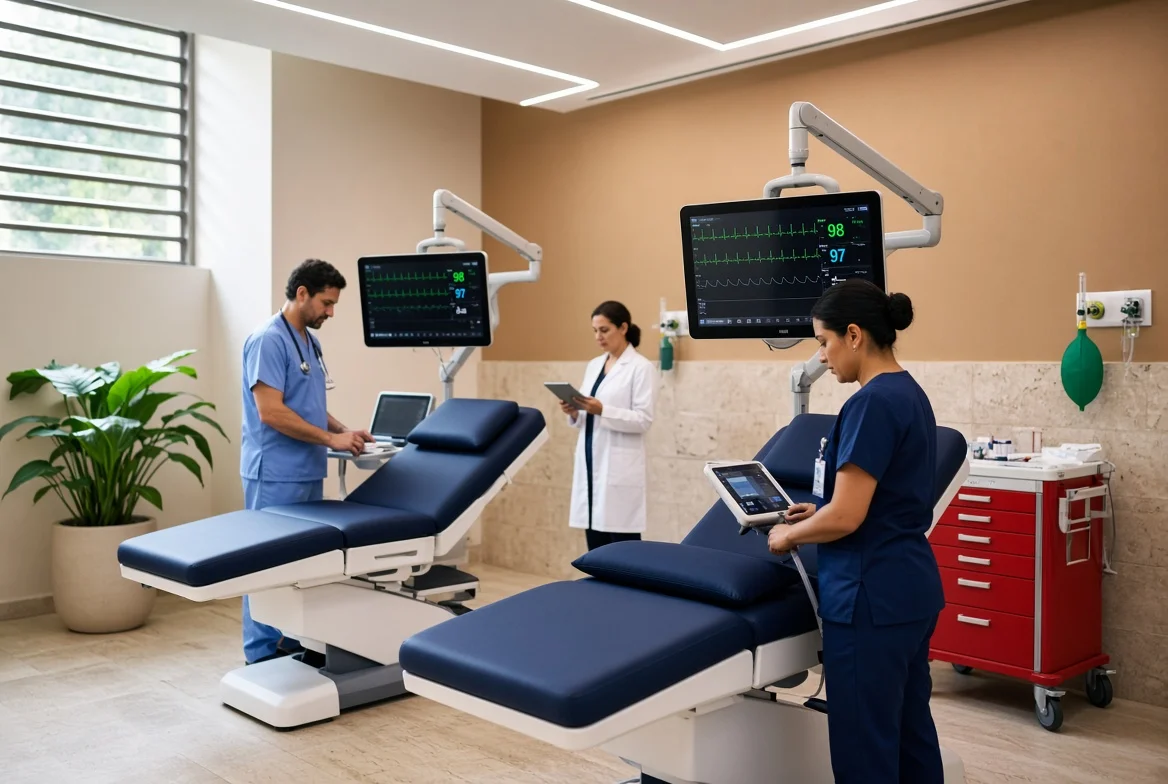
Who is in the room, hour by hour
“Medically supervised” means something different at every clinic. Here is what it means at ours.
At some clinics it means a nurse on call in another building. At ours it means the people below, at the times below. Ask any clinic for this table. If they cannot produce it, you have your answer.
Swipe sideways to see all 5 roles
Before travel
Screening call and EKG review
Day 1
Arrival, repeat EKG and labs
Day 2
Preparation and consent
Day 3, session
Dosing, from first dose to physician sign-off
Day 3, night
Overnight monitoring
Day 4
Telemetry and morning EKG
Days 5 to 7
Recovery, follow-up planning, discharge
Days 8 to 90
Follow-up
“Not required” is written on purpose. A psychiatrist adds nothing to a cardiac monitoring night, and we would rather say so than pad the table. Every cell marked “in the room” is a commitment, and it is repeated in your screening pack.
What each credential means
5 roles, and the question each one exists to answer.
Titles are easy to print. What matters is which decision each person is licensed to make, and what they are accountable for if it goes wrong.
Cardiology · medical director
Cardiologist
A physician with a specialty cédula in cardiology. Ibogaine’s main risk is cardiac: it slows conduction and can prolong the QT interval. The cardiologist sets the QTc and electrolyte thresholds in writing, reads every EKG against them, and is in the room for dosing so the person who set the limits is the person watching the monitor.
The question this role answers: is this heart safe to dose today, and who says so?
Emergency medicine · responsable sanitario
Emergency physician
ACLS-trained, with emergency department experience in a Mexico City private hospital. Signs every go or no-go decision, owns the crash cart, oxygen and defibrillator at the bedside, and runs the hospital transfer protocol. Also the facility’s responsable sanitario, the person COFEPRIS holds legally responsible for the establishment’s compliance.
The question this role answers: if something goes wrong in the next 60 seconds, who acts, and who is legally on the hook?
Psychiatry · addiction medicine
Psychiatrist
Plans every medication washout with your prescriber at home, reviews psychiatric history at screening, meets you on days 5 to 6 to plan the 90 days, and writes the clinical summary your doctor receives. Leads the milestone calls at days 45, 60 and 90 and takes anything medical the coordinator hears on the weekly calls.
The question this role answers: what has to change before you fly, and what happens after you land at home?
Nursing · ACLS certified
ACLS-trained nurse
ACLS is Advanced Cardiovascular Life Support: airway management, rhythm recognition and defibrillation, the skills that matter in the first minute of a cardiac event. 1 nurse to 1 patient during the session and through the night after it, and a nurse on site around the clock for the full 7 days. Not on call. On site.
The question this role answers: who is physically next to you at 3am, and what are they trained to do?
Non-clinical · bilingual
Coordinator
1 named person from your first message to the day-90 call. Runs the pre-travel checklist, meets you at the facility, briefs your family, updates your family contact during the session and calls you every week to day 30. Anything medical is passed to the psychiatrist the same day. The coordinator is not a salesperson and is not paid on bookings.
The question this role answers: who do I call, and will it be the same person next month?
Verify it yourself
How to check a Mexican physician’s licence in about 5 minutes.
Every physician in Mexico is issued a cédula profesional by the Secretaría de Educación Pública, and a separate cédula for each specialty. Both are public. Your screening pack lists the numbers for every clinician on your case so you can look them up before you pay a deposit.
If a clinic gives you a name but not a cédula number, ask for it. If they will not give it, that is the answer.
1
Open the SEP registry
Go to the Registro Nacional de Profesionistas at cedulaprofesional.sep.gob.mx. It is a government site and it is free.
2
Search the name exactly as it appears in your pack
Mexican names carry 2 surnames. Enter them in the order we give you, or search by the cédula number directly.
3
Match the number and the specialty
You should see at least 2 entries: the medical degree and the specialty (cardiología, medicina de urgencias, psiquiatría). A physician with only the first is a general practitioner, whatever the website calls them.
4
Check the facility, not only the people
Ask for the COFEPRIS aviso de funcionamiento and the name of the responsable sanitario. Both are in your screening pack. A licensed clinic has them; a villa does not.
5
If anything does not match, tell us
Send the screenshot to your coordinator. We would rather explain a registry lag than have you wonder. If it cannot be explained, do not book.
The dosing room
5 things that do not happen in our dosing room.
Each of these happens somewhere. Each one is in the 2012 review of ibogaine deaths, directly or by implication. They are rules here, not preferences.
No dose without the cardiologist present.
Not “reachable”, not “reviewed the EKG that morning”. In the room, from the first dose until the physician signs the session off.
No non-clinical facilitator running the session.
A guide, a sitter or a ceremony leader can be present if you want one. They do not make medical decisions and they do not replace a nurse.
No nurse “on call” from another building.
1 ACLS-trained nurse per patient, in the room, through the session and the night. On site around the clock for the rest of the stay.
No dose on the day-1 numbers if they moved.
The EKG and labs are repeated on arrival. If they no longer meet the thresholds, dosing waits or is cancelled, whatever the flight cost.
No monitoring by pulse oximeter alone.
Continuous 12-lead ECG and oximetry, with the trace visible to the cardiologist in the room and the emergency physician overnight. A fingertip device is not monitoring.
And 1 thing that always does: a transfer plan you can read.
A written transfer agreement with a private hospital 9 minutes away, the number to call, and who calls it. It is in your screening pack, not in a drawer.
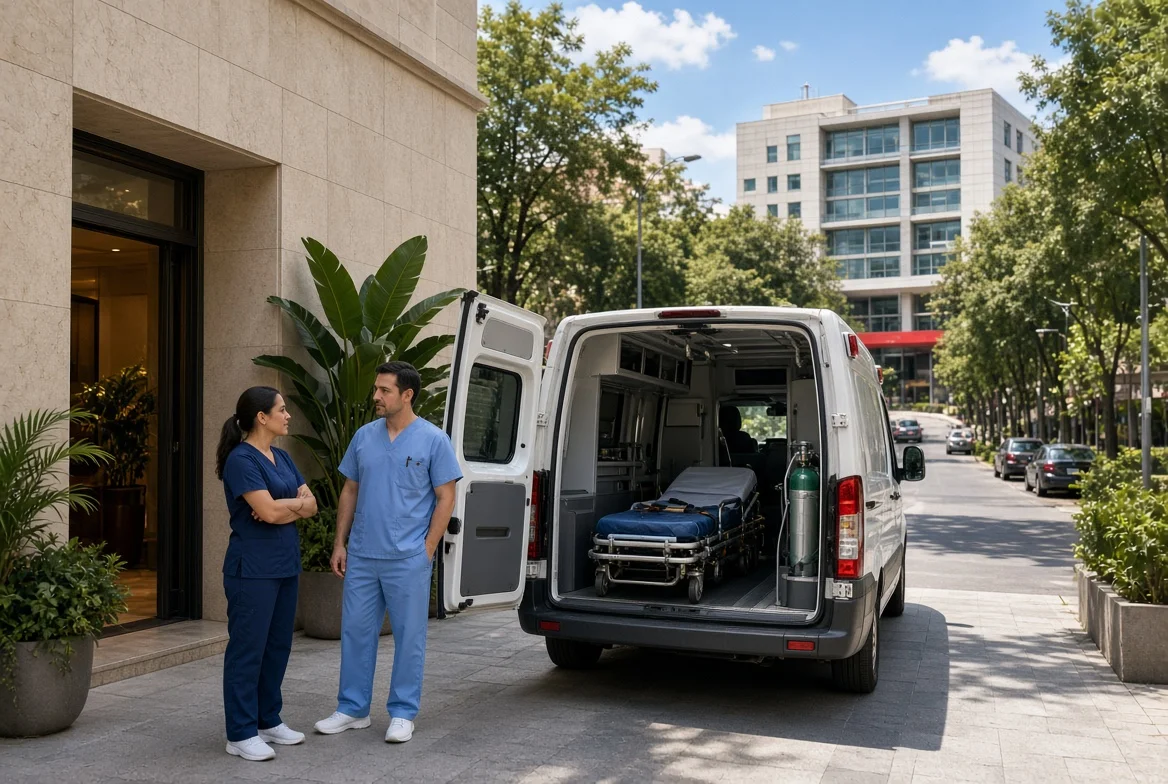
The hospital behind the room
The team is 5 people. The plan is bigger than 5 people.
Ibogaine’s cardiac risk does not care how good the physician is. That is why the facility holds a written transfer agreement with a private hospital 9 minutes away by ambulance, why the emergency physician has worked in a Mexico City emergency department, and why the transfer protocol is rehearsed rather than filed.
- Crash cart, oxygen and defibrillator at the bedside for every session, checked before the first dose
- A written transfer agreement naming the hospital and the receiving department, shown to you at screening
- The emergency physician makes the call and travels with you if a transfer happens
- Your family contact is called by the coordinator at the moment a transfer is decided, not after
- Mexico City was chosen for its hospitals. A coastal clinic 40 minutes from the nearest emergency department cannot offer this, whatever its website says
Take this to any clinic
8 questions to ask about the team, and the answer you should hear.
Including ours. If a clinic answers all 8 in writing, you are choosing between 2 good options. If it answers 3, you are not.
01
Who is physically in the room during dosing, by name and specialty?
A cardiologist, an emergency physician and an ACLS nurse. Names and cédulas in writing.
02
Who reads my EKG before I travel, and what threshold do they use?
A cardiologist, against a written QTc threshold you are told.
03
Is the nurse on site overnight, or on call?
On site, in the room the night after dosing, and in the building every night after.
04
Which hospital would I go to, how far is it, and is the agreement in writing?
A named private hospital, a measured time in minutes, and a document you can read.
05
Who signs the decision to dose, and what is their licence number?
A physician, with a cédula you can look up in the SEP registry.
06
Who is the responsable sanitario, and is the facility registered with COFEPRIS?
A named physician, and yes, with the aviso de funcionamiento available to you.
07
Who plans my medication washout, and do they talk to my prescriber?
A psychiatrist, and yes, before any deposit.
08
Who calls me on day 45, and is it a clinician?
A named coordinator every week, and the psychiatrist at days 45, 60 and 90.
Questions about the team
What families ask about the people.
Questions about the program, the price and what we treat have their own pages. These are the ones about who is looking after you.
Why are the physicians not named on this website?
Because a name on a web page proves nothing, and we would rather you verify a licence number than trust a bio and a photo. Every name, specialty and cédula number goes to you in the screening pack before any deposit, with instructions for checking them in the SEP registry.
Can I speak to a physician before I pay anything?
Yes. The screening call is with a physician or nurse from the team, not a salesperson, and it happens before any deposit. If you want the cardiologist to walk you through your own EKG before you decide, ask the coordinator to arrange it.
Does the team speak English?
Yes. The coordinator and the clinicians who speak with you and your family work in English and Spanish. Consent, the day-2 explanation and the written summary for your doctor at home are all in English.
Is the cardiologist in the room for the whole session, or only the start?
The whole session, from the first dose until the physician signs it off. Overnight, the emergency physician is on site and the nurse is in the room, with the cardiologist on call and the monitor trace visible remotely. That handover is written into the protocol and you can read it.
Who do I talk to at 3am on day 5?
The nurse on site, who is in the building every night of the stay and can wake the physician on site. Your family contact reaches the coordinator during the day and the facility’s night line at any hour; both numbers are in the pack.
What happens if a team member is unavailable during my stay?
Dosing does not go ahead without a cardiologist and an emergency physician in the room. If either cannot be present on day 3, the session moves, not the standard. You are told before you fly if a scheduled clinician has changed, and the replacement’s name and cédula go to you the same way.

The names come next
Ask 3 questions. Get 5 names and 5 licence numbers back.
A physician or nurse calls you within 1 business day. If screening says yes, the full team is named to you in writing, with cédulas, before a deposit is requested.