
Key Takeaways
- Feeling empty after quitting cocaine is anhedonia, a drop in the ability to feel pleasure or want things. It’s common: 77% of 313 people seeking treatment for cocaine use in France reported depressive symptoms during withdrawal.
- It usually fades with time off cocaine. In 2 inpatient studies, low mood was worst at the start and eased steadily over 3 to 4 weeks, though it can last for months after long-term heavy use.
- A low mood that’s still there about 1 month after acute withdrawal ends is the point to get a depression assessment. For thoughts of suicide, call or text 988 in the US now, any hour.
If you’re feeling empty after quitting cocaine, there’s a biological reason for it. Your brain’s reward system is running low. Food, music, sex and people feel muted, and wanting anything takes effort. The feeling usually fades. Researchers have tracked it in 2 studies that kept cocaine users drug-free on a supervised unit. Low mood was worst at the start and eased steadily over 3 to 4 weeks. After long-term heavy use, the low mood can last for months. If the emptiness comes with thoughts of ending your life, call or text 988 in the US right now, any hour of the day.
What Is Anhedonia After Quitting Cocaine?
Anhedonia after quitting cocaine is a stretch of flatness, when things that used to feel good barely register and motivation runs low. It usually comes from the cocaine use itself and fades the longer you stay off it. It’s also common: 77% of 313 people seeking treatment for cocaine use in France reported depressive symptoms during withdrawal.
Sad and empty aren’t the same. Sadness hurts. Anhedonia feels closer to nothing: your favorite meal tastes like cardboard, and a text from a friend feels like homework. People describe it as gray or numb.
Doctors call the first part of this cocaine withdrawal. Psychiatry’s diagnostic manual, the DSM-5, describes it as a low, unhappy mood plus at least 2 physical changes. Those changes include fatigue, vivid bad dreams, sleeping too much or too little, a bigger appetite, and feeling slowed down or restless. They begin “within a few hours to several days” after someone stops prolonged use. If you’re unsure your use went on long enough to count, start with the 4 changes that mark how casual use becomes dependence.
Why Cocaine Leaves The Brain Running Flat
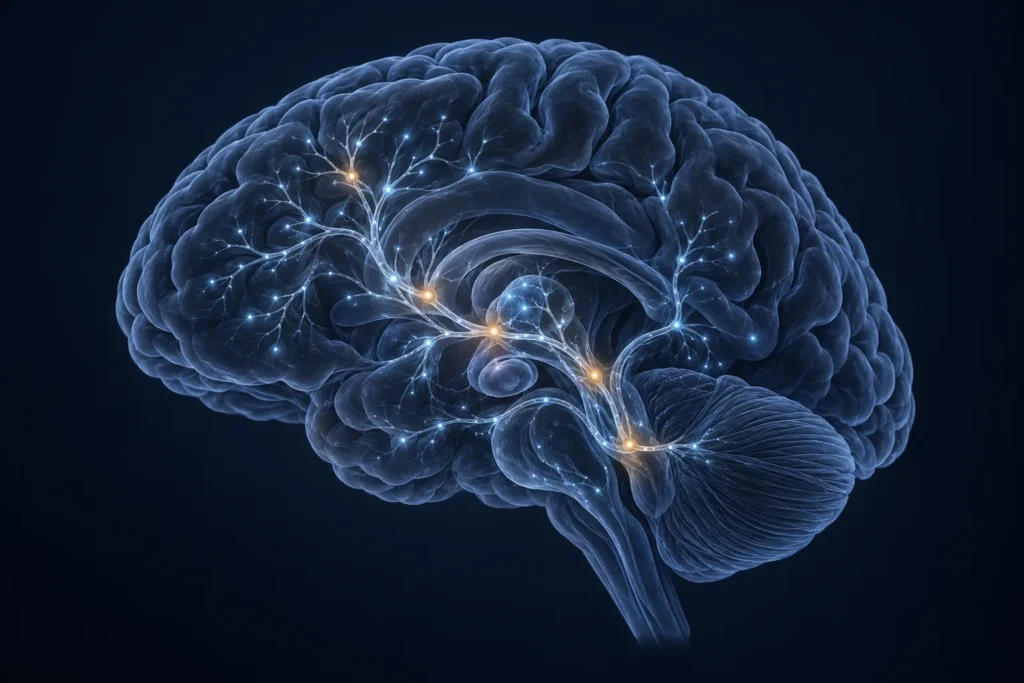
Repeated cocaine use pushes the brain to turn its own dopamine signaling down. That turned-down system is what’s left when you stop, so everyday rewards land softer until it recovers.
Cocaine blocks the pump that clears dopamine from the gaps between nerve cells. During a high, dopamine piles up in the reward system. The brain adjusts to repeated surges by turning its own receivers down. Brain scans show it. In a 1993 PET imaging study led by Nora Volkow, people who used cocaine had fewer available dopamine D2 receptors than people who didn’t. The drop was still there 3 to 4 months after detox.
A review of 32 studies across drugs found the same arc. Anhedonia tends to appear as a result of heavy use and fades with abstinence. It also predicts stronger craving and a higher chance of relapse in people trying to quit.
That last finding is why the flat weeks need a plan. The emptiness talks people into using again. Cocaine is the fastest way to make it lift, for a little while.

How Long Does The Empty Feeling Last?
In the studies that tracked it day by day, the worst came in the first days and eased across the first month. After long-term heavy use, low mood and craving can hang on for months. Brain changes have been measured 3 to 4 months out.
The National Library of Medicine notes that craving and depression can last for months after someone stops long-term heavy use. The table lays out the usual order.
| When | What it usually feels like | What the research shows | What to do |
| First hours to days after the last use | Exhaustion, long sleep, big appetite, a heavy low mood | The DSM-5 places withdrawal onset “within a few hours to several days” of stopping prolonged use | Sleep, eat, and skip alcohol or pills to come down |
| Weeks 1 to 4 | Flat, bored, low drive, craving that comes and goes | In 2 inpatient studies, mood was worst at the start and improved steadily over 3 to 4 weeks | Keep a fixed wake time and 1 planned thing a day |
| Months 2 to 4 | More good days, flat spells, craving set off by people and places | A PET study still found fewer dopamine D2 receptors 3 to 4 months after detox | Count clean days and plan around your triggers |
| About 1 month after withdrawal ends, no better | Low mood that isn’t lifting | The DSM-5 treats this as a sign to check for depression that isn’t caused by the cocaine | Book a depression assessment |
Your timing depends on how much and how long you used, how you’re sleeping and whether you’re drinking. Use the table to check that you’re moving, and skip grading yourself against a deadline.
What Inpatient Studies Found About A Second Crash
They didn’t find one. In both studies below, mood was at its worst at the start and improved from there, week after week.
Recovery sites often split cocaine withdrawal into neat phases on a fixed schedule. That picture traces back to a 1986 study of 30 chronic cocaine users that reported a 3-phase sequence of symptoms. Researchers then watched people quit in settings where no cocaine could get in.
- In a 1990 study, 12 men who used cocaine heavily, mostly by injection, lived on a research unit for 28 days. They were compared with 10 men without an addiction. Their mood distress and craving were highest on admission and dropped steadily over the 28 days. The lead author suggested calling it short-term abstinence, since the classic withdrawal pattern never appeared.
- In 1991, a team kept 22 cocaine-dependent inpatients drug-free for 3 weeks with daily symptom ratings. The ratings started mildly raised and fell steadily. The authors called the symptoms relatively mild and said the results didn’t support routine medication for uncomplicated cases. Frank Gawin, lead author of the 1986 phase study, was on that team.
One caveat: nurses who rated 13 of those 22 patients saw mood move more unevenly than the patients’ own ratings did.
The next point is an interpretation, and no study has tested it. If the emptiness spikes at week 2 or 3 at home, look at what changed around you before you blame brain chemistry. Being back with the same people, cash in your pocket, a bad night’s sleep or drinks can each do it. An inpatient unit takes those away, and the steady line in those studies is what’s left.
Anhedonia Or Depression: The 1-Month Line
A low mood that’s still there about 1 month after acute withdrawal ends is a signal. The DSM-5 treats it as evidence of a depression that may stand apart from the cocaine. That’s the point to get a depression assessment and stop waiting for it out.
The clock starts when acute withdrawal ends. Your last use is the wrong starting point. The manual lists this as 1 example of evidence, and a doctor weighs it with your history. 3 questions help a doctor sort it out:
- Did the low mood start before you ever used cocaine?
- Has it been about a month since withdrawal ended?
- Is it lifting week by week, or is it flat?
At Ibogaine Treatment MX, the psychiatrist’s first full session with a cocaine patient covers how far the crash has taken their mood.

What Helps Cocaine Anhedonia Fade In 2026
Time off cocaine does most of the work. For treatment, contingency management is the standard of care. It pays small rewards, often vouchers, for drug-free urine tests.
That’s the position of the 2024 stimulant guideline from the American Society of Addiction Medicine and the American Academy of Addiction Psychiatry. It says contingency management “represents the current standard of care.” The same guideline says medicines for stimulant use disorder are used off-label. MedlinePlus adds that there are presently no medicines that reduce cocaine cravings.
What helps day to day is plain and unglamorous:
- Wake up at the same time every day, even after a bad night.
- 1 small thing a day that used to feel good, done whether or not you feel like it. Expect it to feel like nothing at first. The repetition is the point.
- Meals on a schedule, since withdrawal often brings a bigger appetite.
- A daily walk counts as exercise on a flat day.
- No alcohol, sleeping pills or anti-anxiety pills to come down. MedlinePlus notes that people in cocaine withdrawal often reach for these. Long-term use shifts the addiction to a new substance.
- 1 person who knows what you’re going through and checks in.
If drinking has already filled the gap, watch for signs of alcohol dependence, which needs its own plan.

Can Ibogaine Help With Anhedonia After Cocaine?
Ibogaine hasn’t been proven to treat anhedonia after cocaine. It isn’t FDA-approved. US federal law lists it as a Schedule I controlled substance, the category for drugs with no currently accepted medical use in the US.
The controlled research is small. A 2026 review of human studies found only 3 randomized trials of ibogaine or noribogaine, the compound the body turns it into. The only one in cocaine users was a 20-person pilot that reported less craving than placebo. The authors concluded it can’t be recommended until larger, well-controlled trials confirm it. They pointed to its toxicity to the heart and its narrow safety margin.
The mood numbers come from open-label work. In a 2018 study, 89 cocaine-dependent people were treated at a 12-bed inpatient unit in St. Kitts on a planned 12-day program. Their average score on the Beck Depression Inventory went from 14.3 at admission to 4.2 at discharge. A month later, it was 4.5 among the 35 people researchers reached. There was no comparison group, and mood also improved steadily in the 2 drug-free inpatient studies above, without ibogaine. So that drop can’t be credited to ibogaine alone.
Ideas about how ibogaine might affect mood come from research on ibogaine and the brain. They stay unproven until controlled trials test them in people.
Safety comes first. A 2022 Dutch safety study gave a single ibogaine dose to 14 opioid-dependent patients. Every patient’s QTc interval lengthened, and half went past 500 milliseconds. QTc measures how long the heart takes to recharge between beats. A separate review looked at 19 deaths reported after ibogaine use between 1990 and 2008. In 12 of the 14 deaths with enough autopsy data, serious existing illness, mostly heart disease, or other drugs explained or helped cause the death. In October 2026, the FDA cited “serious safety concerns” as it asked for public input on how early ibogaine trials should be designed.
Cocaine acts on the same part of the heart, which is why the Ibogaine Treatment MX medical team reads the heart first. Whether someone qualifies for ibogaine for cocaine addiction starts with that check, and some people don’t.
When Feeling Empty After Quitting Cocaine Needs Help Now
Get help today if the emptiness comes with thoughts of suicide. The same goes if it hasn’t lifted about a month after withdrawal ended, or if you’re using alcohol or pills to get through it. MedlinePlus notes that cocaine withdrawal can bring suicidal thoughts in some people. Treat those thoughts as a symptom to act on now.
- Thoughts of suicide or of not waking up: call or text 988 now.
- Chest pain, a racing or skipping heartbeat, or fainting: call 911.
- No change about a month after withdrawal ended: book a depression assessment.
- Drinking or taking pills to cope: tell a doctor before it turns into a second problem.
If you’re weighing ibogaine and want a physician to look at your heart history first, send us the details.
Frequently Asked Questions
Is feeling empty after quitting cocaine normal?
Yes. In a French study of 313 people seeking treatment for cocaine use, 77% reported depressive symptoms during withdrawal. A review of 32 studies found anhedonia usually follows heavy drug use and fades with abstinence.
How long does feeling empty after quitting cocaine last?
In 2 inpatient studies, mood improved steadily over 3 to 4 weeks. After long-term heavy use, low mood and craving can last for months. A PET study found fewer dopamine D2 receptors 3 to 4 months after detox.
Does anhedonia from cocaine go away?
It usually fades with time off cocaine, and a review of 32 studies found anhedonia diminishes with abstinence. If low mood hasn’t lifted about 1 month after acute withdrawal ends, the DSM-5 treats that as a reason to check for a separate depression.
Is there medication for anhedonia after cocaine?
No medicine is approved for it. The 2024 ASAM/AAAP guideline says medicines for stimulant use disorder are used off-label. It calls contingency management, small rewards for drug-free tests, the current standard of care.
Can feeling empty make you relapse?
It can. A review of 32 studies found anhedonia predicts stronger cravings and a higher chance of relapse in people trying to stay off drugs. A fixed daily routine and 1 person you can call shrink the stretches you spend alone with it.
Can ibogaine treat feeling empty after quitting cocaine?
It hasn’t been proven to. A 2026 review found only 3 small randomized trials of ibogaine or noribogaine, and the mood data in cocaine users come from a 2018 open-label study with no comparison group. Ibogaine isn’t FDA-approved, it’s a Schedule I drug in the US, and deaths have been reported, so anyone weighing it needs a heart screen first. Feeling empty after quitting cocaine usually eases with time off cocaine.
Sources
- Weddington WW, Brown BS, Haertzen CA, Cone EJ, Dax EM, Herning RI, et al. Changes in mood, craving, and sleep during short-term abstinence reported by male cocaine addicts: a controlled, residential study. Archives of General Psychiatry. 1990;47(9):861. doi:10.1001/archpsyc.1990.01810210069010
- Satel SL, Price LH, Palumbo JM, McDougle CJ, Krystal JH, Gawin FH, et al. Clinical phenomenology and neurobiology of cocaine abstinence: a prospective inpatient study. American Journal of Psychiatry. 1991;148(12):1712-1716. doi:10.1176/ajp.148.12.1712
- MedlinePlus. Cocaine withdrawal. US National Library of Medicine. Reviewed January 8, 2025. https://medlineplus.gov/ency/article/000947.htm
- Substance Abuse and Mental Health Services Administration. In crisis? Call or text 988. https://www.samhsa.gov/find-support/in-crisis
- Cabé J, Brousse G, Pereira B, Cabé N, Karsinti E, Zerdazi EH, et al. Influence of clinical markers of dopaminergic behaviors on depressive symptoms during withdrawal in cocaine users. Frontiers in Psychiatry. 2021;12:775670. doi:10.3389/fpsyt.2021.775670
- American Psychiatric Association. Diagnostic and Statistical Manual of Mental Disorders. 5th ed. Arlington, VA: American Psychiatric Publishing; 2013.
- Volkow ND, Fowler JS, Wang GJ, Hitzemann R, Logan J, Schlyer DJ, et al. Decreased dopamine D2 receptor availability is associated with reduced frontal metabolism in cocaine abusers. Synapse. 1993;14(2):169-177. doi:10.1002/syn.890140210
- Garfield JBB, Lubman DI, Yücel M. Anhedonia in substance use disorders: a systematic review of its nature, course and clinical correlates. Australian and New Zealand Journal of Psychiatry. 2014;48(1):36-51. doi:10.1177/0004867413508455
- Gawin FH, Kleber HD. Abstinence symptomatology and psychiatric diagnosis in cocaine abusers. Archives of General Psychiatry. 1986;43(2):107. doi:10.1001/archpsyc.1986.01800020013003
- American Society of Addiction Medicine, American Academy of Addiction Psychiatry. The ASAM/AAAP clinical practice guideline on the management of stimulant use disorder. Journal of Addiction Medicine. 2024;18(1):1-56. doi:10.1097/ADM.0000000000001299
- Mash DC, Duque L, Page B, Allen-Ferdinand K. Ibogaine detoxification transitions opioid and cocaine abusers between dependence and abstinence: clinical observations and treatment outcomes. Frontiers in Pharmacology. 2018;9:529. doi:10.3389/fphar.2018.00529
- Knuijver T, Schellekens A, Belgers M, Donders R, van Oosteren T, Kramers K, Verkes R. Safety of ibogaine administration in detoxification of opioid-dependent individuals: a descriptive open-label observational study. Addiction. 2022;117(1):118-128.
- Alper KR, Stajić M, Gill JR. Fatalities temporally associated with the ingestion of ibogaine. Journal of Forensic Sciences. 2012;57(2):398-412. doi:10.1111/j.1556-4029.2011.02008.x
- US Food and Drug Administration. FDA seeks public input to support ibogaine research. October 5, 2026. https://www.fda.gov/news-events/press-announcements/fda-seeks-public-input-support-ibogaine-research
This article is information, not medical advice. Ibogaine is not approved by the FDA and carries cardiac risk. Whether it is an option for you is decided by a physician after an EKG and blood tests, never by an article. If you or someone else is in danger now, call your local emergency number.