
How long does heroin detox take? The World Health Organization’s guidelines give 2 numbers. Withdrawal starts 8 to 24 hours after the last dose and lasts 4 to 10 days. Symptoms usually peak 2 to 3 days in. If your heroin was cut with fentanyl, plan for longer.
The part we’d plan around is the month after. Heroin withdrawal is miserable, but MedlinePlus, the US National Library of Medicine’s health site, says it usually isn’t life-threatening. Overdose after detox is the bigger danger: tolerance falls once you stop, so an old dose can kill. In a Massachusetts study of 30,681 people leaving detox, only 41% got medication for opioid use disorder within a year. While they took it, their risk of dying was a third of the risk for people with no follow-up treatment.
How Long Does Heroin Withdrawal Last?
Physical withdrawal from heroin lasts about 4 to 10 days. It starts within a day of the last dose and is worst 2 to 3 days in. Guidelines disagree on the first hours, so the table shows each source.
| Phase | Timing after the last dose | What it feels like | Source |
| Early | 6 to 24 hours | Anxiety, agitation, muscle aches, runny nose, watery eyes, sweating, yawning, poor sleep | MedlinePlus (within 12 hours), SA Health (6 to 12 hours), WHO (8 to 24 hours) |
| Peak | 48 to 72 hours | Stomach cramps, diarrhea, nausea, vomiting, goosebumps, wide pupils | DACAS (peak at 48 to 72 hours), MedlinePlus (late symptoms) |
| Easing | Days 4 to 10 | Physical symptoms fade | WHO (4 to 10 days), SA Health (about 5 days), DACAS (5 to 7 days) |
| After | Varies | Poor sleep, low mood and craving can outlast the physical symptoms | No agreed timeline in the guidelines we checked |
Vomiting and diarrhea are where withdrawal turns risky. MedlinePlus lists dehydration and mineral imbalances among the complications, along with breathing vomit into the lungs. Hallucinations and seizures aren’t typical of heroin withdrawal, says DACAS, an Australian clinical advisory service. They point to another cause and need a doctor right away.

What Fentanyl Changes In 2026
Fentanyl makes the timeline harder to predict. In 2024, DEA labs found it in 66% of heroin samples weighing up to 500 grams. With daily use, it can take a week or more to clear.
DEA’s 2024 heroin report covered 2,767 heroin exhibits. It counted xylazine, an animal sedative, 697 times in powder heroin. It also found nitazenes, another group of synthetic opioids, in 5 tablet seizures. Street heroin is often a mix, and some of the additives cause withdrawal of their own.
Powder or tar changes the odds
Powder heroin is far more likely to be cut. DEA found 83% of powder samples mixed with something, most often fentanyl. Only 14% of tar samples were cut at all, and fentanyl turned up in 10%. Tar still dominates west of the Mississippi, and powder dominates the East Coast. That’s why, when we screen someone for heroin addiction treatment, we ask on the first call what form they bought and where.
A 2020 Johns Hopkins study shows why fentanyl stretches the clock. It followed 12 residential patients who tested positive for fentanyl when they arrived. Fentanyl took 7.3 days on average after the last use to clear from their urine, and 1 patient tested positive for 19 days. With regular use, fentanyl can collect in body fat and leave slowly. Our clinic plans fentanyl cases separately for that reason. The wait before an ibogaine dose is longer than for heroin, because dosing while fentanyl is still leaving the body risks precipitated withdrawal (withdrawal that starts suddenly) on the same day ibogaine puts the most strain on the heart.
Medetomidine withdrawal needs a hospital
A newer additive can turn withdrawal into an emergency. Medetomidine, a veterinary sedative, turned up in 72% of illegal opioid samples tested in Philadelphia in the last 4 months of 2024. A CDC report then described 165 patients hospitalized there between September 2024 and January 2025. They had fentanyl withdrawal plus severe high blood pressure and racing hearts that standard withdrawal medicines didn’t control. 150 of them (91%) needed intensive care, and 39 were put on a ventilator.
Most reports so far come from Philadelphia. Wherever you are, a pounding heart, severe high blood pressure or vomiting that won’t stop during withdrawal belongs in an emergency room.
How Long Does Heroin Detox Take With Each Method?
It depends on the method. A short medication-managed detox runs about a week. Maintenance medication has no fixed end. The faster options carry serious risks of their own.
| Method | How long | What the evidence shows | Main risk |
| No opioid medicine, comfort medicines only | 4 to 10 days of withdrawal (WHO) | Clonidine eases sweating, aches, cramps and anxiety but not craving (MedlinePlus) | Dehydration; overdose if use resumes after tolerance drops (MedlinePlus) |
| Short buprenorphine course | About 8 days, with 5 days of dosing | In an Australian study of 18 heroin users, 78% finished the 8 days and withdrawal stayed mild (Lintzeris, 2002) | Overdose if use resumes after it ends (MedlinePlus) |
| Ongoing medication (buprenorphine, methadone or naltrexone) | Months to years, no fixed end | After detox, the risk of death while on medication was a third of the risk with no follow-up treatment (Walley, 2020) | Stopping methadone or buprenorphine later usually means a slow taper (MedlinePlus) |
| Rapid detox under general anesthesia | Billed as rapid; done under anesthesia | No better than standard detox on withdrawal scores; at 1 New York clinic in 2012, 2 of 75 patients died and 5 more were hospitalized (CDC, 2013) | Death and hospital admission |
| Ibogaine (not FDA-approved) | 7-day stay at our clinic, with 1 dose on day 3 | Withdrawal scores fell from 31 to 14 about 3 days after treatment in 1 study of 30 people (Brown and Alper, 2018) | Heart rhythm changes: half of 14 patients passed a QTc of 500 ms (Knuijver, 2022) |
The pattern matters more than any single row. The methods that end fastest don’t touch the risk that peaks after detox. MedlinePlus advises long-term methadone or buprenorphine for people who go through withdrawal again and again.
Does Ibogaine Shorten Heroin Withdrawal?
In 1 small study, withdrawal scores fell by more than half about 3 days after treatment. Ibogaine doesn’t shorten the risky weeks after detox, and it adds heart risk.
A 2018 study followed 30 people treated at 2 clinics in Mexico, 18 of whom used heroin. It measured withdrawal on a self-rated scale. Scores fell from 31.0 before treatment to 14.0 at the recheck, about 76 hours later on average. At 1 month, 15 of the 30 reported no opioid use in the past 30 days. That leaves 15 who didn’t report a month without opioids. Those are the weeks when an old dose carries the most overdose risk.
We don’t publish a success rate for heroin, or for anything else we treat, and we don’t claim ibogaine cures addiction. Studies this small, without control groups and based on self-report, can’t support one.
The heart risk is the trade-off. In a 2022 Dutch study, 14 opioid-dependent patients each got 1 dose of 10 mg/kg under full monitoring. Half reached a QTc above 500 ms, a reading doctors treat as a warning sign for dangerous rhythms. 6 stayed above 450 ms for more than 24 hours. The changes reversed, but they’re why our cardiac monitoring runs through the night and into the next day.

Ibogaine is a Schedule I drug in the US, and no ibogaine product is FDA-approved. Our 7-day program gives 1 supervised dose on day 3, after 2 days that repeat the EKG and labs, correct electrolytes and manage withdrawal. Before any of that, screening happens at home: a 12-lead EKG and blood tests ordered near you, read by a cardiologist before you book a flight. If speed is the reason ibogaine appeals to you, it’s the wrong reason. The withdrawal ends sooner. The risk afterward doesn’t.
Is The Danger Over When Withdrawal Ends?
No. The weeks after detox carry the highest overdose risk, because tolerance drops after even a short break from heroin. MedlinePlus says most opioid overdose deaths happen in people who have recently detoxed.
A London study followed 137 people through a 28-day inpatient detox program. 3 died of overdose within 4 months of leaving, and all 3 had completed both the detox and the full program. Nobody who failed to finish detox, and so kept their tolerance, died. The authors said the finding needed to be repeated.
The larger Massachusetts study shows what helps. It covered 30,681 people discharged from detox between 2012 and 2014. Within 12 months, 41% received medication for opioid use disorder and 35% went to residential treatment. Compared with no follow-up treatment, the risk of death was 67% lower while on medication. It was 37% lower during residential treatment and 89% lower for people who had both.
That’s why we’d plan the month after before booking any detox. For most people leaving detox, the strongest survival data belong to medication for opioid use disorder, alone or with residential care. Judge any opioid addiction treatment, ours included, by its plan for day 30. Ours includes weekly calls through day 30, then calls at days 45, 60 and 90, a written summary for your doctor at home and a list of US clinicians near you. The tolerance warning is given at discharge and repeated on the first follow-up call.
What to line up before day 1
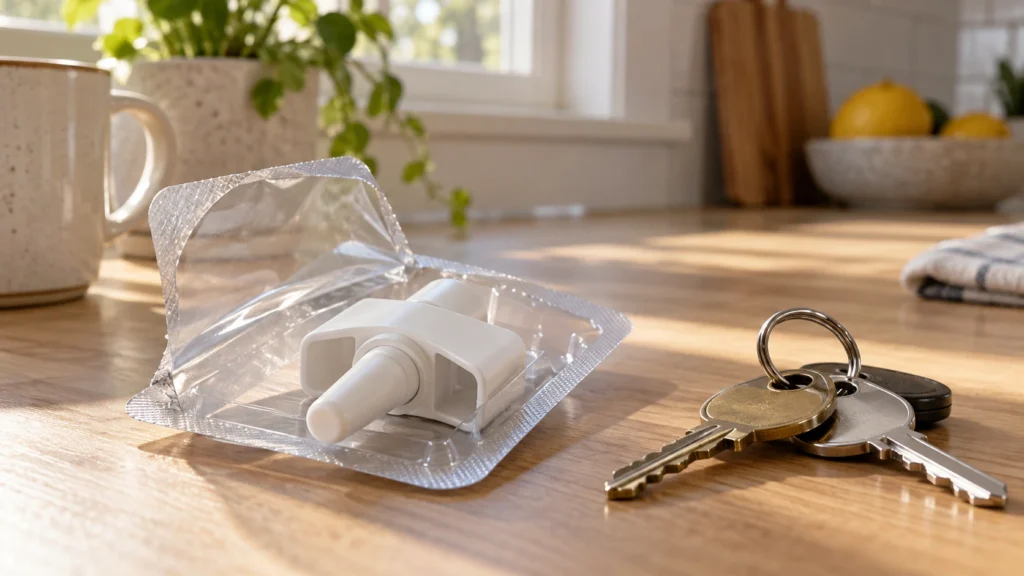
Settle the follow-up before the detox starts. Know who you’ll see in the first week after discharge, and whether that includes buprenorphine, methadone, naltrexone or residential care. Get naloxone into the house; the FDA approved Narcan nasal spray for sale without a prescription in March 2023. Tell the people you live with where it is. And agree on a plan if use happens again: never alone, and never at the old dose.
If you’re in the US and need a referral, call SAMHSA’s National Helpline at 1-800-662-4357. It’s free, confidential and open 24/7 in English and Spanish.
When Detox At Home Isn’t Safe
Home detox from heroin alone can work with medical support. MedlinePlus calls it difficult, though, and some situations need a facility or a hospital. South Australia’s health department recommends inpatient care in 3 cases. One is withdrawal from more than 1 drug at once. The others are a home life that makes stopping hard, and serious physical or mental health problems.
The newer drug supply adds 2 more. Signs of medetomidine withdrawal, such as severe high blood pressure, a racing heart or vomiting that won’t stop, mean a hospital. Fentanyl exposure means the timeline can run past what a home plan expects.
If you searched “how long does heroin detox take” for someone you love, plan for 2 stretches. The first is 4 to 10 days of withdrawal. The second is the month after, and it needs a plan before day 1. If ibogaine is on your list, screening tells you in writing whether it’s an option at all, before anyone talks about dates. You can start a screening on our contact page with 3 questions.
Questions About Heroin Detox
How long does heroin detox take with Suboxone?
Suboxone’s active opioid is buprenorphine, and a short buprenorphine detox runs about a week. In an Australian study of 18 heroin users, dosing lasted 5 days inside an 8-day withdrawal period; 78% finished, and withdrawal stayed mild. In the Massachusetts study, the drop in death risk was largest while people stayed on medication. If you’re on Suboxone now and want to stop, coming off Suboxone takes a plan made with your prescriber, and at our clinic that transition happens before travel.
How long does heroin detox take if your heroin had fentanyl?
Often longer, and less predictably. DEA labs found fentanyl in 66% of heroin samples up to 500 grams in 2024. In a 2020 Johns Hopkins study of 12 patients, fentanyl took 7.3 days on average to clear from urine, and 1 patient tested positive for 19 days. Tell any detox team what form you bought and where.
Is methadone withdrawal longer than heroin withdrawal?
Yes. WHO guidelines say withdrawal from long-acting opioids like methadone starts 12 to 48 hours after the last dose and lasts 10 to 20 days, against 4 to 10 days for heroin. MedlinePlus puts the start within about 30 hours of the last methadone dose. Anyone with methadone dependence needs a slower plan than a heroin detox.
Can heroin withdrawal kill you?
Withdrawal from heroin alone usually isn’t life-threatening, per MedlinePlus, though dehydration from vomiting and diarrhea can turn dangerous. 2 things change the picture. Medetomidine withdrawal sent 150 of 165 hospitalized Philadelphia patients to intensive care in 2024 and 2025. And MedlinePlus says most opioid overdose deaths happen in people who have recently detoxed.
What medicine helps heroin withdrawal most?
WHO guidelines name buprenorphine the best opioid medicine for moderate to severe opioid withdrawal, and MedlinePlus says it can shorten detox. Clonidine eases sweating, aches, cramps and anxiety but doesn’t reduce craving. Methadone also relieves withdrawal and is used long term.
How long does ibogaine treatment for heroin take?
At our clinic, the stay is 7 days, with 1 supervised dose on day 3 and heart monitoring through that night and the next day. In a 2018 study of 30 people, withdrawal scores fell by more than half about 3 days after treatment. Screening comes first, at home, and takes weeks.
Sources
- Brown TK, Alper K. Treatment of opioid use disorder with ibogaine: detoxification and drug use outcomes. American Journal of Drug and Alcohol Abuse. 2018;44(1):24-36.
- Centers for Disease Control and Prevention. Deaths and severe adverse events associated with anesthesia-assisted rapid opioid detoxification, New York City, 2012. MMWR. 2013;62(38):777-780.
- Drug and Alcohol Clinical Advisory Service (DACAS), Victoria, Australia. Heroin withdrawal: GP factsheet.
- Huhn AS, Hobelmann JG, Oyler GA, Strain EC. Protracted renal clearance of fentanyl in persons with opioid use disorder. Drug and Alcohol Dependence. 2020;214:108147.
- Huo S, London K, Murphy L, et al. Notes from the field: suspected medetomidine withdrawal syndrome among fentanyl-exposed patients, Philadelphia, Pennsylvania, September 2024 to January 2025. MMWR. 2025;74(15):266-268.
- Ibogaine Treatment MX website, program and treatment pages. Accessed October 12, 2026.
- Knuijver T, Schellekens A, Belgers M, et al. Safety of ibogaine administration in detoxification of opioid-dependent individuals: a descriptive open-label observational study. Addiction. 2022;117(1):118-128.
- Lintzeris N. Buprenorphine dosing regime in the management of out-patient heroin withdrawal. Drug and Alcohol Review. 2002;21(1):39-45.
- MedlinePlus, US National Library of Medicine. Opiate and opioid withdrawal. Reviewed May 15, 2026.
- SA Health, Government of South Australia. Opioid withdrawal management.
- Strang J, McCambridge J, Best D, et al. Loss of tolerance and overdose mortality after inpatient opiate detoxification: follow up study. BMJ. 2003;326(7396):959-960.
- Substance Abuse and Mental Health Services Administration. National Helpline, 1-800-662-HELP (4357).
- US Code of Federal Regulations, 21 CFR 1308.11, Schedule I (ibogaine, DEA controlled substance code 7260).
- US Drug Enforcement Administration, Special Testing and Research Laboratory. 2024 Annual Heroin Report (PRB-2025-81). September 2025.
- US Food and Drug Administration. FDA approves first over-the-counter naloxone nasal spray. March 29, 2023.
- US Food and Drug Administration. FDA seeks public input to support ibogaine research. October 5, 2026.
- Walley AY, Lodi S, Li Y, et al. Association between mortality rates and medication and residential treatment after in-patient medically managed opioid withdrawal: a cohort analysis. Addiction. 2020;115(8):1496-1508.
- World Health Organization. Clinical guidelines for withdrawal management and treatment of drug dependence in closed settings. 2009. Chapter 4, Withdrawal management.
This article is information, not medical advice. Ibogaine is not approved by the FDA and carries cardiac risk. Whether it is an option for you is decided by a physician after an EKG and blood tests, never by an article. If you or someone else is in danger now, call your local emergency number.