Opioid addiction is a medical condition. A person keeps using opioids even as the drug harms their health, work or relationships. Doctors call it opioid use disorder. It can begin with something ordinary, like a prescription after surgery or pills left in a medicine cabinet.
That starting point matters. In a study of 36,177 US adults aged 18 to 64 who weren’t taking opioids before surgery, 5.9% to 6.5% filled an opioid prescription 3 to 6 months later, compared with 0.4% of a group without surgery.1 Researchers call that persistent opioid use, which isn’t the same as addiction. Meanwhile, provisional CDC data count 44,564 opioid-involved overdose deaths in 2025, down from 55,296 in 2024.
What Is Opioid Addiction?
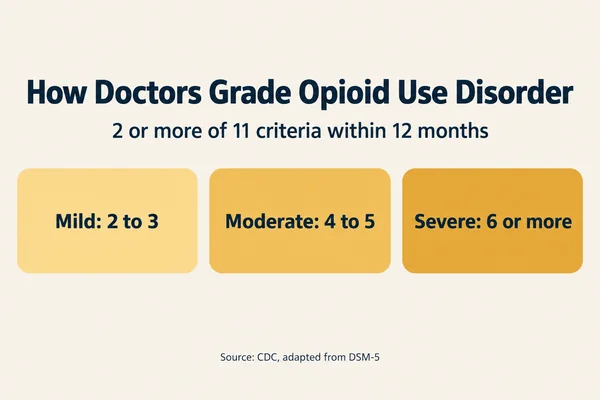
Opioid addiction, or opioid use disorder, is opioid use a person can’t control, even when it causes harm. Doctors diagnose it when at least 2 of 11 criteria show up within a year, such as craving or failed attempts to cut back. It’s mild with 2 to 3 criteria, moderate with 4 to 5 and severe with 6 or more.
Most of the 11 describe behavior a family can see. CDC’s plain-language list of the criteria doctors use includes taking more than intended and falling behind at work or home. It also includes spending hours getting or recovering from opioids, and using in risky situations.
Tolerance and withdrawal are on the list too, with 1 exception. They don’t count if someone takes opioids only as prescribed under medical supervision. That’s why a person on a steady pain prescription can be physically dependent without having an addiction.
Over time, opioids change how the brain handles reward and stress. Those changes explain a large part of why opioids are so addictive. They’re also part of why doctors treat addiction as a medical condition.
How Does Opioid Addiction Start?
Opioid addiction can start through 4 routes: a prescription after surgery, long-term pain treatment, leftover pills at home and street drugs. Each route carries its own kind of risk. Only the FDA figure below measures addiction itself; the others measure persistent use, leftover pills or a lethal dose.
| Route | What the research measured | Source |
| A prescription after surgery | Persistent use: 5.9% to 6.5% of adults aged 18 to 64 who weren’t on opioids before surgery filled an opioid prescription 3 to 6 months later, vs 0.4% without surgery | JAMA Surgery, 20171 |
| Long-term pain treatment | New addiction: about 1% to 6% of adults starting long-term opioid pain medicines newly met the criteria for opioid addiction within 12 months | FDA, 20255 |
| Leftover pills at home | Unused pills: 67% to 92% of surgery patients had unused opioids, and in the 2 studies that checked, 73% to 77% didn’t lock them up | JAMA Surgery, 20176 |
| Street pills and powder | Lethal dose: 2 mg of fentanyl can be lethal, depending on body size, tolerance and past use | DEA7 |
The surprise in the first row is the size of the surgery. In that study, minor operations showed about the same rate of persistent opioid use as major ones, so a minor procedure isn’t automatically low risk. Instead, the risk factors were about the patient. They included tobacco use, mood or anxiety disorders, alcohol or drug use disorders, back pain and arthritis.
FDA’s 2025 review points the same way. Among adults starting long-term opioid pain medicines, the strongest risk factor for addiction was a personal history of a substance use disorder. Still, months of prescriptions aren’t the same as addiction. And the FDA says its figures don’t apply to short-term use.
Leftover pills and street pills can be 2 stages of the same story. An unlocked bottle is within reach of anyone in the house. Once a prescription runs out, pills bought outside a pharmacy can contain fentanyl. Our screening for oxycodone addiction asks where the last tablets came from, because the source changes the plan.
Signs Families Notice First
Some early signs of opioid addiction show up in the pill bottle first. Prescriptions run out early, or refills come sooner than planned. Pills may also go missing from someone else’s bottle.
Other signs match the doctors’ checklist. Promises to cut back don’t hold, and hours go into getting pills or recovering from them. Work, school or family plans start slipping. Some people use it before driving, or they need more pills for the same effect.
Withdrawal is easy to mistake for a bad cold. Early signs include anxiety, muscle aches, watery eyes, a runny nose, sweating, yawning and trouble sleeping. Later signs include stomach cramps, diarrhea, goosebumps, nausea and vomiting. With heroin, symptoms usually start within 12 hours of the last use, and with methadone, within 30 hours.
A single sign doesn’t make a diagnosis, because doctors look for at least 2 criteria within a year. Even so, a pattern of 2 or 3 signs is a good reason to see a doctor who treats addiction.
Which Treatments Have The Best Evidence?
Medication has the strongest evidence. FDA has approved 3 medicines for opioid use disorder: buprenorphine, methadone and naltrexone. The World Health Organization advises methadone or buprenorphine maintenance for most patients. It also says withdrawal treatment on its own doesn’t work well, because relapse is high.
| Medication | Type | Forms | What the research shows |
| Buprenorphine | Partial opioid agonist | Films, tablets and extended-release injections | After a nonfatal overdose, linked to a 37% lower death rate |
| Methadone | Full opioid agonist | Liquid concentrate or tablets dissolved in liquid | About 3 times as likely to keep people in treatment as withdrawal treatment or placebo; after a nonfatal overdose, linked to a 53% lower death rate |
| Naltrexone | Opioid blocker | Extended-release injection | After a nonfatal overdose, no clear link to a lower death rate |
The overdose figures come from a Massachusetts study of 17,568 adults who survived an opioid overdose. It shows an association, so it can’t prove the cause. Also, a special federal waiver is no longer needed to prescribe buprenorphine. If someone on methadone wants to stop later, getting off methadone takes its own supervised plan.
Where Ibogaine Fits In
Ibogaine is a Schedule I controlled substance in the United States. It isn’t among the FDA-approved medicines for opioid use disorder.9 Even so, in October 2026 FDA asked for public input on how early-phase ibogaine trials in adults with opioid use disorder or PTSD should be designed. Its notice describes a starting dose of no more than 10 mg/kg, plus monitoring for heart and neurologic side effects.
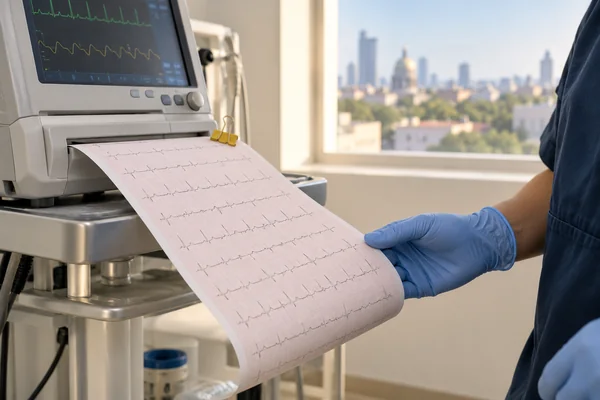
That focus on the heart shapes how we approach ibogaine for opioid addiction at our clinic in Mexico City. Screening starts on paper, before anyone books a flight. It covers a 12-lead EKG, potassium, magnesium, a liver panel and a complete medication list. In fact, a medication is the most common reason for a “not yet,” such as Suboxone, methadone, SSRIs or short-acting opioids.
When the answer is yes, the 7-day program ends with a tolerance warning and a talk about naloxone before discharge. Then a named coordinator calls weekly until day 30, and again on days 45, 60 and 90. Day 60 gets extra attention, because that’s when most support from elsewhere has faded. If a parent or partner was on the screening call, they can join these calls too.
What Families Can Do This Week
Families can take 3 steps at home this week: cut access to leftover pills, prepare for an overdose and start the treatment conversation. None of them needs a doctor’s visit to get started.
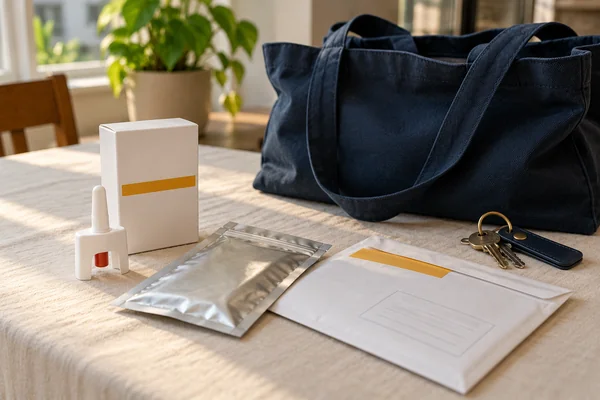
1. Clear out leftover opioids. FDA’s first choice is a take-back option, such as a drop-off site or a prepaid mail-back envelope. DEA counts more than 15,300 pharmacies, hospitals and businesses that take back medicines year-round. And since March 31, 2025, makers of opioid pain medicines have had to supply mail-back envelopes to outpatient pharmacies that ask, so ask at the counter.
If take-back isn’t readily available, FDA tells you to flush opioids on its flush list, such as oxycodone, hydrocodone, morphine and fentanyl. A hospital handout that ranks high in search says opioids can’t be flushed, but FDA found these drugs pose little risk to the environment. It judged the harm from someone taking them by accident to be far greater. Tramadol and codeine aren’t on the list, so mix them with used coffee grounds, dirt or cat litter, seal them in a bag or can, and put them in the trash.
A drug-deactivation bag is another option. In a Michigan trial, 57.1% of patients given a charcoal bag said 4 to 6 weeks later that they’d disposed of their leftover opioids. By comparison, 28.6% did with usual care and 33.3% did with a pamphlet. A 2021 review of 16 studies found the same pattern: bags or kits raised disposal in all 3 studies that tested them, while education helped in 3 of 7.
2. Keep naloxone in the house. Naloxone reverses an opioid overdose by blocking the drug’s effects. It’s sold over the counter in all 50 states. With fentanyl, more than 1 dose may be needed, so call 911 and stay with the person until help arrives or for at least 4 hours.
3. Start the treatment conversation early. If 2 or more of the signs above fit, book a visit with a doctor who treats addiction and ask about buprenorphine or methadone. Then, if you’re curious about ibogaine, talk with the screening team at Ibogaine Treatment MX. They review the EKG, labs and medication list before anyone talks about travel.
Frequently Asked Questions
Can Minor Surgery Lead To Persistent Opioid Use?
It can. In a study of 36,177 adults aged 18 to 64 who weren’t taking opioids before surgery, 5.9% to 6.5% filled an opioid prescription 3 to 6 months later, compared with 0.4% of a group without surgery. Minor operations showed about the same rate as major ones. Persistent use isn’t a diagnosis of addiction, though it’s a reason to use the smallest supply that controls the pain.
Can Opioid Addiction Be Treated Without Medication?
Some programs treat it without medication, but medication has the strongest evidence. The World Health Organization advises methadone or buprenorphine maintenance for most patients, and it says withdrawal treatment on its own doesn’t work well because relapse is high. In the trials WHO reviewed, people on methadone were about 3 times as likely to stay in treatment as people given withdrawal treatment or a placebo.
What Should I Do With Leftover Opioid Pills?
Take them to a pharmacy drop box or another take-back site, or use a prepaid mail-back envelope. If take-back isn’t readily available, FDA says to flush opioids on its flush list, such as oxycodone and hydrocodone. Opioids that aren’t on the list, like tramadol, go in the trash. Mix them with used coffee grounds, dirt or cat litter first, and seal them in a bag or can.
Is Ibogaine Legal In The United States?
No. Ibogaine is a Schedule I controlled substance in the US, and it isn’t among the FDA-approved medicines for opioid use disorder. In October 2026, FDA asked for public input on how early-phase trials in adults with opioid use disorder or PTSD should be designed. Comments are due by November 20, 2026.
Does Naloxone Work On Fentanyl Overdoses?
Yes. Naloxone blocks the effects of opioids, including fentanyl, but more than 1 dose may be needed. It’s sold over the counter in all 50 states. CDC advises staying with the person until help arrives or for at least 4 hours.
How Is Opioid Addiction Diagnosed?
A clinician checks for 11 criteria adapted from the DSM-5, such as craving, failed attempts to cut back and using in risky situations. Opioid use disorder is diagnosed when at least 2 appear within a year. The grades are mild for 2 to 3, moderate for 4 to 5 and severe for 6 or more.
Disclaimer
This article is for general education and isn’t medical advice. Decisions about opioid addiction treatment belong with a licensed clinician who knows the person’s full history. Ibogaine is a Schedule I controlled substance in the US and isn’t FDA-approved; it’s still being studied, and FDA’s trial outline calls for heart monitoring. If someone is unresponsive or struggling to breathe, call 911 and give naloxone if you have it.
References
1. Brummett CM, Waljee JF, Goesling J, Moser SE, Lin P, Englesbe MJ, Bohnert ASB, Kheterpal S, Nallamothu BK. New persistent opioid use after minor and major surgical procedures in US adults. JAMA Surgery. 2017;152(6):e170504. doi:10.1001/jamasurg.2017.0504
2. Centers for Disease Control and Prevention, National Center for Health Statistics. U.S. overdose deaths decrease for third consecutive year in 2025. Press release. May 13, 2026. Accessed October 12, 2026. https://www.cdc.gov/nchs/pressroom/releases/20260513.html
3. Centers for Disease Control and Prevention. Opioid use disorder: diagnosis. Reviewed April 16, 2024. Accessed October 19, 2026. https://www.cdc.gov/overdose-prevention/hcp/clinical-care/opioid-use-disorder-diagnosis.html
4. Koob GF, Volkow ND. Neurobiology of addiction: a neurocircuitry analysis. The Lancet Psychiatry. 2016;3(8):760-773. doi:10.1016/S2215-0366(16)00104-8
5. US Food and Drug Administration. FDA is requiring opioid pain medicine manufacturers to update prescribing information regarding long-term use. Drug Safety Communication. July 31, 2025. Updated April 3, 2026. Accessed October 19, 2026. https://www.fda.gov/drugs/drug-safety-and-availability/fda-requiring-opioid-pain-medicine-manufacturers-update-prescribing-information-regarding-long-term
6. Bicket MC, Long JJ, Pronovost PJ, Alexander GC, Wu CL. Prescription opioid analgesics commonly unused after surgery: a systematic review. JAMA Surgery. 2017;152(11):1066-1071. doi:10.1001/jamasurg.2017.0831
7. Drug Enforcement Administration. Facts about fentanyl. Accessed October 19, 2026. https://www.dea.gov/resources/facts-about-fentanyl
8. MedlinePlus. Opiate and opioid withdrawal. Medical Encyclopedia. Reviewed May 15, 2026. Accessed October 19, 2026. https://medlineplus.gov/ency/article/000949.htm
9. US Food and Drug Administration. Information about medications for opioid use disorder (MOUD). Content current as of December 26, 2024. Accessed October 19, 2026. https://www.fda.gov/drugs/information-drug-class/information-about-medications-opioid-use-disorder-moud
10. World Health Organization. Guidelines for the Psychosocially Assisted Pharmacological Treatment of Opioid Dependence. World Health Organization; 2009. Accessed October 12, 2026. https://www.ncbi.nlm.nih.gov/books/NBK143171/
11. Larochelle MR, Bernson D, Land T, Stopka TJ, Wang N, Xuan Z, Bagley SM, Liebschutz JM, Walley AY. Medication for opioid use disorder after nonfatal opioid overdose and association with mortality: a cohort study. Annals of Internal Medicine. 2018;169(3):137-145. doi:10.7326/M17-3107
12. Drug Enforcement Administration, Diversion Control Division. Controlled substances: alphabetical order. Updated August 27, 2026. Accessed October 12, 2026. https://www.deadiversion.usdoj.gov/schedules/orange/c_cs_alpha.pdf
13. US Food and Drug Administration. FDA seeks public input to support ibogaine research. Press release. October 5, 2026. Accessed October 19, 2026. https://www.fda.gov/news-events/press-announcements/fda-seeks-public-input-support-ibogaine-research
14. US Food and Drug Administration. Drug disposal: FDA’s flush list for certain medicines. Content current as of October 31, 2024. Accessed October 19, 2026. https://www.fda.gov/drugs/disposal-unused-medicines-what-you-should-know/drug-disposal-fdas-flush-list-certain-medicines
15. Drug Enforcement Administration. DEA hosts the 31st National Prescription Drug Take Back Day on Saturday, October 24th. Press release. October 16, 2026. Accessed October 19, 2026. https://www.dea.gov/press-releases/2026/10/16/dea-hosts-31st-national-prescription-drug-take-back-day-saturday-october
16. US Food and Drug Administration. FDA approves REMS modification, advancing new drug disposal option. October 31, 2024. Accessed October 19, 2026. https://www.fda.gov/drugs/drug-alerts-and-statements/fda-approves-rems-modification-advancing-new-drug-disposal-option
17. US Food and Drug Administration. Where and how to dispose of unused medicines. Content current as of April 16, 2025. Accessed October 19, 2026. https://www.fda.gov/consumers/consumer-updates/where-and-how-dispose-unused-medicines
18. Brummett CM, Steiger R, Englesbe M, Khalsa C, DeBlanc JJ, Denton LR, Waljee J. Effect of an activated charcoal bag on disposal of unused opioids after an outpatient surgical procedure: a randomized clinical trial. JAMA Surgery. 2019;154(6):558-561. doi:10.1001/jamasurg.2019.0155
19. Lamplot JD, Premkumar A, James EW, Lawton CD, Pearle AD. Postoperative disposal of unused opioids: a systematic review. HSS Journal. 2021;17(2):235-243. doi:10.1177/15563316211001366
20. Centers for Disease Control and Prevention. Lifesaving naloxone. Reviewed June 11, 2025. Accessed October 19, 2026. https://www.cdc.gov/stop-overdose/caring/naloxone.html
This article is information, not medical advice. Ibogaine is not approved by the FDA and carries cardiac risk. Whether it is an option for you is decided by a physician after an EKG and blood tests, never by an article. If you or someone else is in danger now, call your local emergency number.