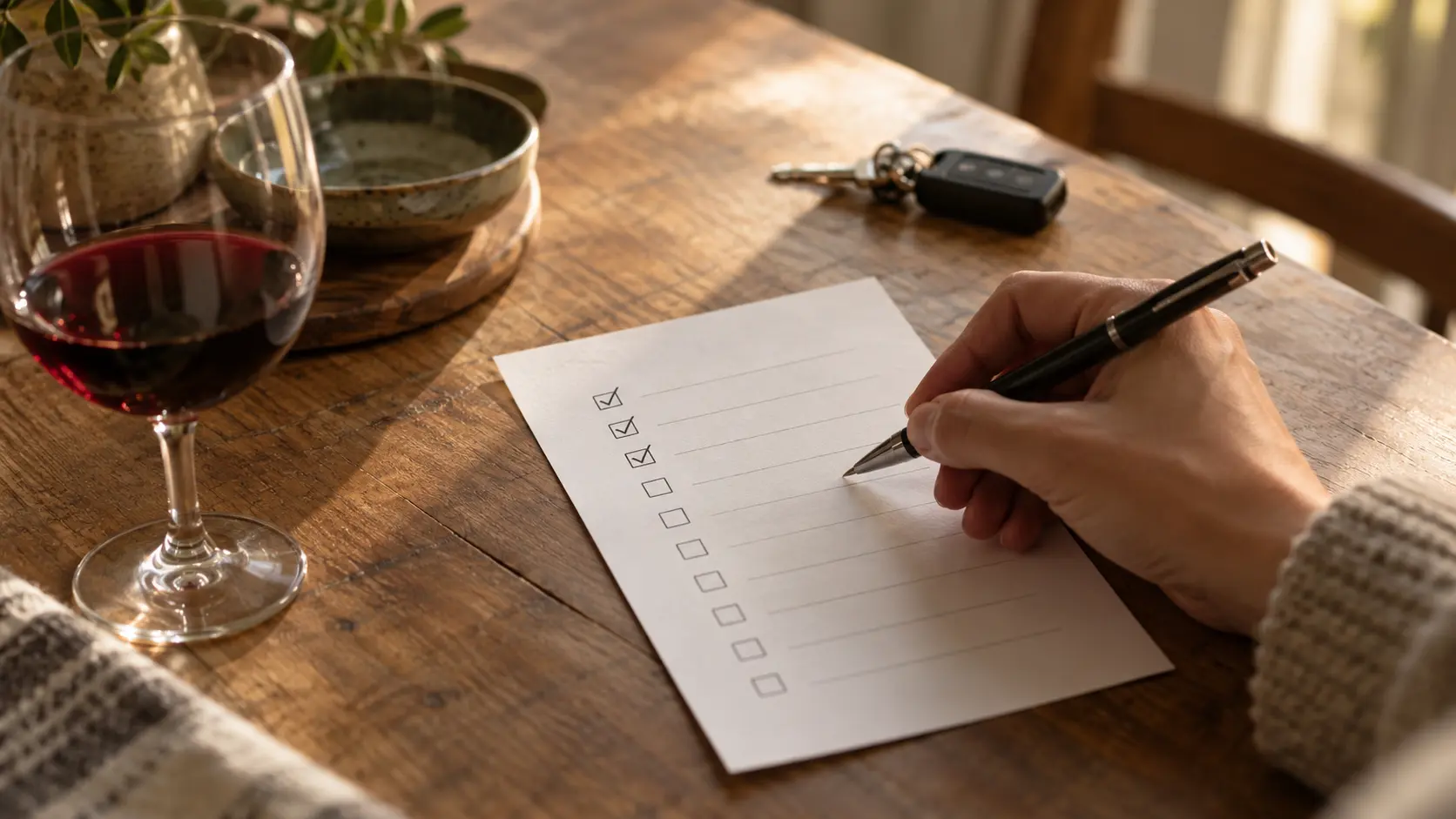
Doctors answer what is considered alcohol addiction with a checklist. Drinking has to cause at least 2 of the 11 problems listed in the DSM-5, the manual US clinicians use, within 12 months. They call it alcohol use disorder, or AUD. 2 or 3 signs means mild, 4 or 5 moderate, and 6 or more severe.
No drink count decides it by itself. I’m Michael Vale, founder of Ibogaine Treatment MX in Mexico City, where alcohol is one of the conditions we treat. When a family asks me where the line is, I’d rather they count signs than count bottles. The signs are what a doctor uses, and one of them decides how carefully someone needs to stop.
How Do Doctors Decide What Is Considered Alcohol Addiction?
They count. A clinician asks about 11 specific problems over the past year, and 2 or more means alcohol use disorder, the rule set out in NIAAA’s guide for clinicians.
AUD replaced the older labels. The National Institute on Alcohol Abuse and Alcoholism (NIAAA), part of the National Institutes of Health, says the term covers what people have called alcohol abuse, alcohol dependence, alcohol addiction and alcoholism. It also treats AUD as a brain disorder: alcohol misuse leaves lasting changes in the brain that make a return to drinking more likely.
It’s common. In 2024, 27.9 million Americans ages 12 and older had AUD, 9.7% of that age group, based on NIAAA’s figures from the National Survey on Drug Use and Health. Among adults, that was 16.4 million men and 10.7 million women.
The 11 Signs, Sorted Into 4 Groups
Count anything that happened in the past 12 months. I’ve grouped the 11 so a family can check them faster. The wording is mine; the criteria are the DSM-5’s.
Control
- Drinking more, or for longer, than planned.
- Wanting to cut down or stop more than once, and not managing it.
- Losing big parts of days to drinking, being sick from it or getting over it.
- Craving: wanting a drink so badly it crowds out other thoughts.
What a family notices: the planned 2 beers that turn into 8, and promises to stop that don’t last past the weekend.
Harm
- Drinking, or being sick from it, getting in the way of home, family, work or school.
- Drinking on through fights with family or friends about it.
- Giving up or cutting back on things that used to matter, to make room for drinking.
What a family notices: missed mornings at work, the same argument every Sunday, a hobby that stopped with no explanation.
Risk
- Getting into risky situations while or after drinking, more than once: driving, swimming, running machinery, unsafe sex.
- Drinking on even though it’s making depression, anxiety or another health problem worse, or after a blackout.
What a family notices: car keys after a night out, or drinking through a doctor’s warning.
Body
- Tolerance: needing much more to get the same effect, or the usual amount doing much less.
- Withdrawal: shakiness, sweating, a racing heart, nausea, trouble sleeping or restlessness as the alcohol wears off, a seizure, or sensing things that aren’t there.
What a family notices: a morning drink to steady the hands, or sweats and shakes on a day without alcohol.
Mild, moderate or severe
| Signs in the past 12 months | What it means |
| 0 or 1 | Not AUD, though heavy drinking still carries health risks |
| 2 or 3 | Mild AUD |
| 4 or 5 | Moderate AUD |
| 6 or more | Severe AUD |
Mild still counts. 2 signs are enough for the diagnosis, and NIAAA’s guidance is that more signs mean more urgency to change. For severe cases, NIAAA adds that stopping may take medical help, because alcohol withdrawal can be life-threatening.
How Many Drinks Make It An Alcohol Addiction?
No number does it by itself. NIAAA defines heavy drinking with drink counts, but the definition of AUD has no drink count in it at all.
Heavy drinking, by NIAAA’s definition, means 5 or more drinks on any day or 15 or more a week for men, and 4 or more on any day or 8 or more a week for women. A binge is a session that takes blood alcohol to 0.08% or higher, usually about 5 drinks for men or 4 for women in about 2 hours.
My position: the drink count is the wrong test, and it fails in both directions. In a CDC analysis of 2009 to 2011 national survey data, 90% of adults who drank excessively did not meet the criteria for alcohol dependence. That study used dependence, an older and narrower diagnosis than AUD, so it misses milder cases. It still shows that heavy drinkers and people with an addiction aren’t the same group.
The other direction is quieter. Take a man who means to have 1 beer after work and has 2 most nights, about 12 a week. He’s under every heavy-drinking line. If he keeps drinking after his doctor ties it to his blood pressure, he meets 2 signs, 1 and 9, and that’s a mild AUD.
The count still matters as a risk signal. In the same CDC data, dependence showed up in 10.5% of binge drinkers and 1.3% of drinkers who didn’t binge.
What counts as 1 drink
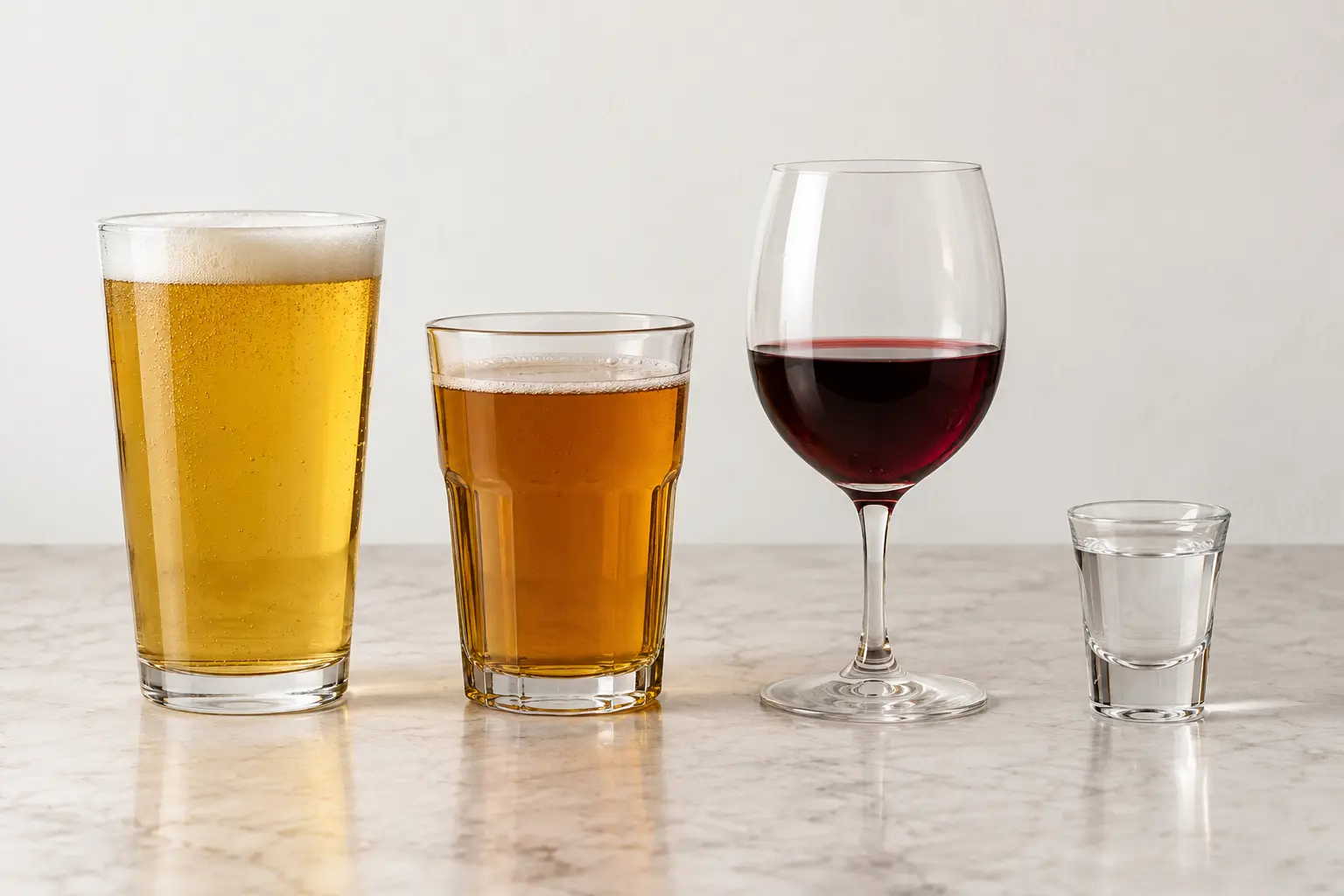
NIAAA sets a standard drink at 14 grams of pure alcohol, or 0.6 fluid ounces. Each of these is 1:
| Drink | Amount | Typical alcohol |
| Regular beer | 12 fl oz | about 5% |
| Malt liquor | 8 to 10 fl oz | about 7% |
| Table wine | 5 fl oz | about 12% |
| Distilled spirits | 1.5 fl oz | about 40% |
Bigger pours change the math. A 750 ml bottle of 12% wine holds about 5 standard drinks, and a 16-ounce craft beer at 7% is closer to 2 than 1.
Which Signs Mean Someone Needs Medical Help To Stop Drinking?
Withdrawal, sign 11. If shakes, sweats, a racing heart or a seizure show up as the alcohol wears off, stopping should be planned with a doctor, because alcohol withdrawal can turn life-threatening.
The National Library of Medicine’s MedlinePlus encyclopedia gives these windows, counted from the last drink:
| Time since the last drink | What can happen |
| Within 8 hours, sometimes days later | Symptoms start: shakiness, sweating, nausea, a racing heart, trouble sleeping |
| 12 to 48 hours | Highest-risk window for withdrawal seizures |
| 24 to 72 hours | Symptoms usually peak |
| 48 to 96 hours, sometimes 7 to 10 days | Delirium tremens most often appears, and it’s a medical emergency |
| Weeks to months | Sleep problems, mood swings and tiredness can linger |
Delirium tremens is most common in people who have been through alcohol withdrawal before, and MedlinePlus says it also often affects people who have used alcohol for more than 10 years.
If there’s any withdrawal history, I tell families not to plan a cold-turkey stop at home. It’s also why alcohol detox at our clinic is run by our physicians, with a nurse on site overnight.
How Is Alcohol Addiction Treated?
With medication, talk therapy, mutual-support groups or a mix. 3 medications are FDA-approved for AUD: naltrexone, taken as a pill or a monthly shot, acamprosate and disulfiram. NIAAA notes that none of them is addictive.
Fewer than 2 in 100 got one in 2019. That year’s national survey counted 14.1 million US adults with AUD; 7.3% got any treatment, and 1.6% got medication for it (Han and colleagues, JAMA Psychiatry, 2021).
If your family member has never been offered one of these 3 medications, ask a doctor about them before you look at anything experimental, ibogaine included.
Ibogaine isn’t on the approved list. It’s a Schedule I drug under US federal law. In October 2026, the FDA asked the public how early ibogaine trials should be designed, with comments open until November 20, 2026. The notice named adults with opioid use disorder and PTSD as priority groups, and it said the agency has allowed an early-phase study of noribogaine, an ibogaine derivative, as a possible AUD treatment. Texas awarded $50 million in December 2025 to FDA-approved ibogaine trials led by UTHealth Houston and UTMB Health.
Where ibogaine fits for alcohol addiction
It hasn’t been shown to treat alcohol addiction, and it doesn’t replace detox. At our clinic, alcohol withdrawal has to be over before anyone gets a dose.
If you’ve been reading about what ibogaine is for, most of the human research you’ll find involves opioids. In rodents, ibogaine cuts how much alcohol animals give themselves, and a 2021 mouse study in Frontiers in Pharmacology found it blocked a lab model of relapse. In people, a small hospital pilot in moderate and severe alcohol use disorder was published in 2026. It was open-label, meaning everyone knew they were getting ibogaine, so it can’t show whether ibogaine works.
If ibogaine for alcohol addiction is on your shortlist, these are the findings that change our plan.
The signs that change our plan
| What we find | What happens next |
| Withdrawal symptoms (sign 11) | A physician-managed detox first, before any dose |
| Low potassium or magnesium | Replaced before dosing day, then rechecked |
| Liver enzymes above our written limit | A “not yet” until the numbers come back down |
| A QTc on the EKG above our written limit | A “no” |
Detox comes first, so an alcohol stay can run longer than the standard program.
Why Withdrawal Has To Finish First
The heart comes first. Ibogaine lengthens the time the heart needs to recharge between beats, which shows on an EKG as a longer QTc. In a 2022 Dutch study of 14 people with opioid dependence, every participant’s QTc lengthened, and half passed 500 milliseconds (Knuijver and colleagues, Addiction). Heavy drinking often drains potassium and magnesium, and low levels of both make rhythm problems more likely, so we correct them first.
The liver comes second. It breaks ibogaine down, and heavy drinking can leave it inflamed or scarred. Detox can move liver numbers, sometimes for the better, so we recheck them after withdrawal instead of deciding on the first set.
What to do with the count
Write it down and take it to a doctor. List which of the 11 signs showed up in the last 12 months, and note any withdrawal or seizure. That list answers what is considered alcohol addiction in your family better than any drink count. If ibogaine is one of the options you’re weighing, bring the same list to a screening call.
FAQs
What is considered alcohol addiction by doctors?
Doctors call it alcohol use disorder and diagnose it when at least 2 of the 11 DSM-5 criteria show up within 12 months. 2 or 3 criteria means mild, 4 or 5 moderate, and 6 or more severe. The criteria cover lost control, craving, harm at home or work, risky use, tolerance and withdrawal.
How many drinks a day is considered alcohol addiction?
No drink count defines it. NIAAA calls 5 or more drinks on any day, or 15 or more a week, heavy drinking for men, and 4 or more on any day, or 8 or more a week, heavy drinking for women. Heavy drinking raises the risk, but in a CDC analysis 90% of adults who drank excessively did not meet the criteria for alcohol dependence.
Is drinking every day considered an alcohol addiction?
Not by itself. Daily drinking counts toward alcohol use disorder only when it comes with signs from the checklist, like failed attempts to cut down, cravings, tolerance or withdrawal. Shakes or sweats on a day without alcohol are withdrawal, and that person should talk to a doctor before stopping.
Is mild alcohol use disorder still alcohol addiction?
Yes. Mild means 2 or 3 of the 11 signs in a year, and it’s a diagnosis. NIAAA’s guidance is that more signs mean more urgency to change, so mild is the point to act, before more signs appear.
How long does alcohol withdrawal last?
Symptoms usually start within 8 hours of the last drink and peak at 24 to 72 hours, according to MedlinePlus. Delirium tremens, a medical emergency, usually appears at 48 to 96 hours and sometimes as late as 7 to 10 days. Sleep and mood problems can last for months.
Can ibogaine help with alcohol withdrawal?
We don’t use it that way. At Ibogaine Treatment MX, a physician manages alcohol withdrawal first, and no one gets a dose until it’s over and their heart and liver numbers have been rechecked. Ibogaine is a Schedule I drug in the US with no FDA approval, and the human evidence in alcohol use disorder rests on small studies, the newest a 2026 pilot.
How common is alcohol addiction in the US?
In 2024, 27.9 million Americans ages 12 and older had alcohol use disorder, 9.7% of that age group. The figures come from NIAAA’s analysis of the National Survey on Drug Use and Health. Among adults, 16.4 million men and 10.7 million women had it.
Sources
- American Psychiatric Association. Diagnostic and Statistical Manual of Mental Disorders. 5th ed. American Psychiatric Association; 2013.
- National Institute on Alcohol Abuse and Alcoholism. Alcohol use disorder: from risk to diagnosis to recovery. Core Resource on Alcohol. Revised May 8, 2025. Accessed October 9, 2026.
- National Institute on Alcohol Abuse and Alcoholism. Understanding alcohol use disorder. Updated January 2025. Accessed October 9, 2026.
- National Institute on Alcohol Abuse and Alcoholism. Alcohol use disorder (AUD) in the United States: age groups and demographic characteristics. Updated August 2025. Accessed October 9, 2026.
- National Institute on Alcohol Abuse and Alcoholism. Understanding alcohol drinking patterns. Updated January 2026. Accessed October 9, 2026.
- Esser MB, Hedden SL, Kanny D, Brewer RD, Gfroerer JC, Naimi TS. Prevalence of alcohol dependence among US adult drinkers, 2009-2011. Preventing Chronic Disease. 2014;11:140329. doi:10.5888/pcd11.140329
- National Institute on Alcohol Abuse and Alcoholism. What is a standard drink? Updated December 2025. Accessed October 9, 2026.
- Alcohol withdrawal. MedlinePlus Medical Encyclopedia. US National Library of Medicine. Reviewed January 1, 2025. Accessed October 9, 2026.
- Delirium tremens. MedlinePlus Medical Encyclopedia. US National Library of Medicine. Reviewed January 1, 2025. Accessed October 9, 2026.
- Han B, Jones CM, Einstein EB, Powell PA, Compton WM. Use of medications for alcohol use disorder in the US: results from the 2019 National Survey on Drug Use and Health. JAMA Psychiatry. 2021;78(8):922. doi:10.1001/jamapsychiatry.2021.1271
- Schedules of controlled substances: Schedule I. 21 CFR §1308.11(d)(21) (2026). Accessed October 9, 2026.
- US Food and Drug Administration. FDA seeks public input to support ibogaine research. News release. October 5, 2026. Accessed October 9, 2026.
- University of Texas Medical Branch. UTMB Health, in collaboration with UTHealth Houston, awarded $50 million by the State of Texas to lead ibogaine clinical trials. UTMB News. December 12, 2025. Accessed October 9, 2026.
- Henriques GM, Anjos-Santos A, Rodrigues IRS, et al. Ibogaine blocks cue- and drug-induced reinstatement of conditioned place preference to ethanol in male mice. Frontiers in Pharmacology. 2021;12:739012. doi:10.3389/fphar.2021.739012
- Rocha JM, Maekawa RM, Reis JAS, et al. Feasibility, safety and preliminary effects of ibogaine in patients with moderate and severe alcohol use disorder: a pilot, open-label study. Trends in Psychiatry and Psychotherapy. Published online 2026. doi:10.47626/2237-6089-2026-1437
- Knuijver T, Schellekens A, Belgers M, et al. Safety of ibogaine administration in detoxification of opioid-dependent individuals: a descriptive open-label observational study. Addiction. 2022;117(1):118-128. doi:10.1111/add.15448
This article is information, not medical advice. Ibogaine is not approved by the FDA and carries cardiac risk. Whether it is an option for you is decided by a physician after an EKG and blood tests, never by an article. If you or someone else is in danger now, call your local emergency number.