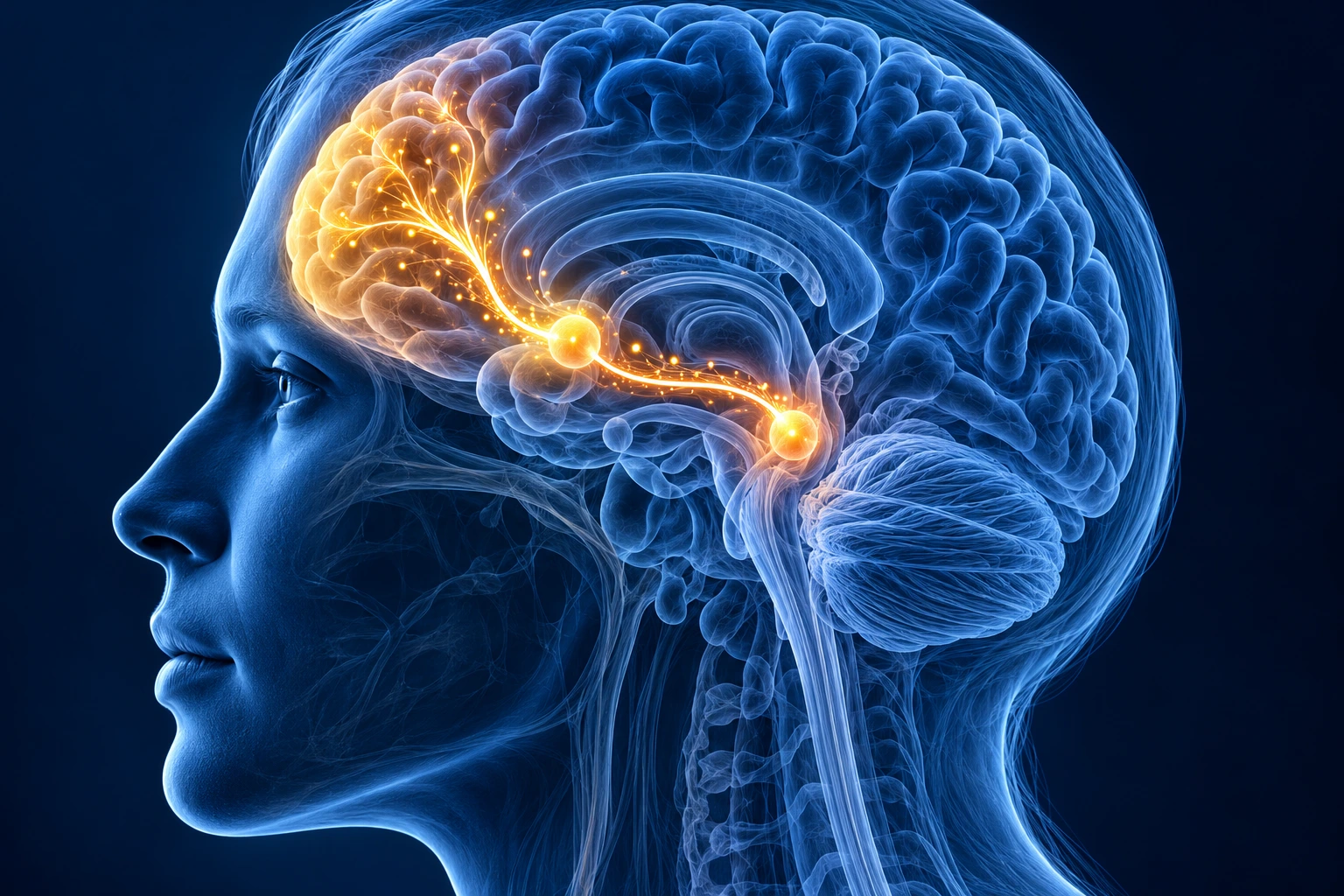
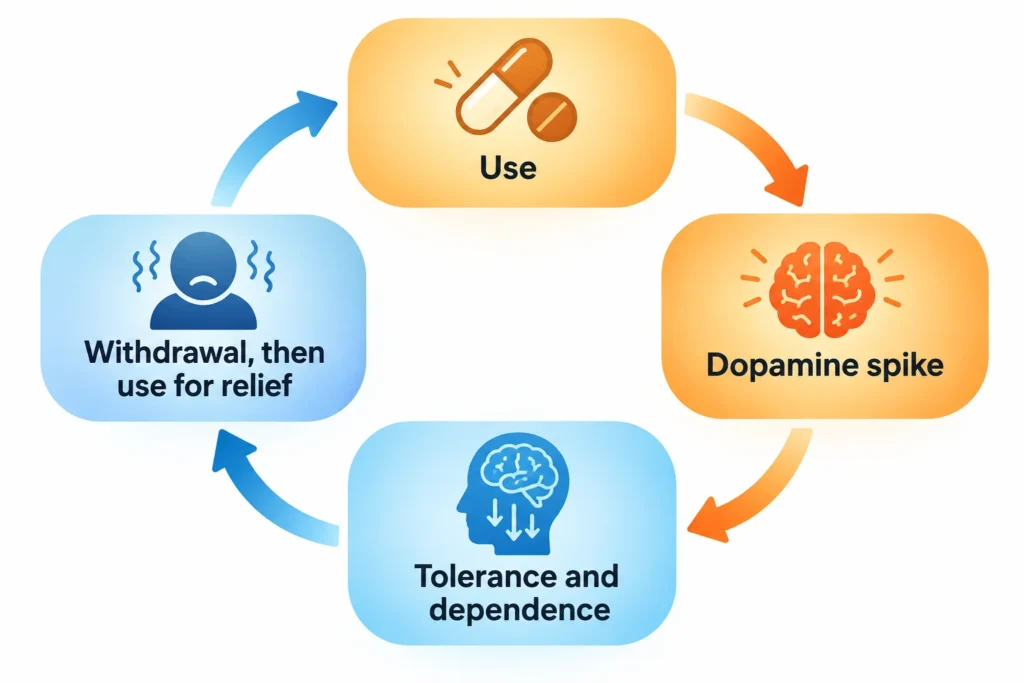
What makes opioids so addictive is a 2-step trap. First, opioids set off a big dopamine spike in the brain’s reward system, which teaches the brain to want them again. Then repeated use changes the brain, so the same dose does less and stopping brings on withdrawal.
Opioids are addictive because they trigger an outsized reward signal and then make the body depend on them. With regular use, tolerance builds and withdrawal sets in when the drug wears off. Over time, a person with opioid addiction often keeps using to feel normal and avoid withdrawal rather than to get high.
Opioid addiction is still common. SAMHSA’s 2025 national survey counted 4.0 million people aged 12 and older in the US with opioid use disorder (OUD), and only 15.7% got medication for it. CDC predicts 67,798 drug overdose deaths in the 12 months ending March 2026, and NIDA says opioids are involved in most overdose deaths.
I run an ibogaine clinic in Mexico City, and most of the people who contact us are a parent or partner, not the person using. This guide is for them as much as anyone.
1. Opioids Set Off A Dopamine Spike In The Reward System
Opioids work by attaching to opioid receptors, the same docking sites the body’s own pain-relieving chemicals, called endorphins, use. These receptors sit on nerve cells in the brain, the spinal cord and throughout the body. That’s why opioids ease pain so well, and why high doses can slow breathing to a dangerous level.
How the dopamine spike happens
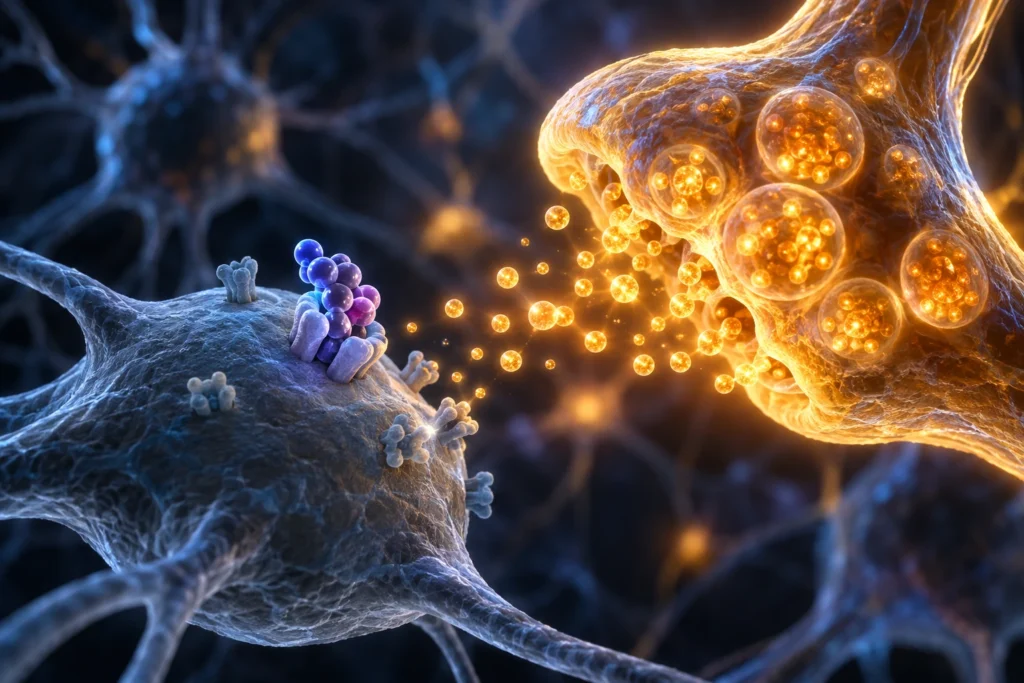
Some of those receptors sit in the brain’s reward circuit. There, opioids quiet the nerve cells that normally keep dopamine cells in check, so the dopamine cells fire harder. The result is a burst of dopamine, the chemical the brain uses to flag something as worth repeating.
Food and time with people we love release dopamine too, but opioids over-activate the same circuit. NIDA describes large dopamine bursts like these as teaching the brain to seek drugs at the expense of healthier goals. That lesson is the first hook.
2. Speed And Strength Make The Hit Harder
How fast a drug reaches the brain changes how strongly the brain learns from it. Opioids act faster when injected or inhaled than when swallowed, and fentanyl acts faster than morphine. NIH brain-imaging research links drug reward to fast dopamine increases rather than slow ones.
Strength matters too. Fentanyl is 50 to 100 times more potent than morphine, so even a small amount can be fatal. It’s often added to fake pills and other drugs, which means people can take it without knowing.
3. Why Does The Brain Keep Wanting More?
The brain links the drug to the people, places and feelings around it. Those links, called cues, can set off strong cravings long after the last dose.
Dopamine doesn’t only mark pleasure. It also tags whatever came right before the reward, so the brain learns to expect the drug. Studies of the brain’s reward system show that, with repeated exposure, the dopamine response shifts from the reward itself to the cues that predict it.
A familiar street, a payday or a bad mood can all set off a craving. The pull can start before the person has made any choice. Craving is 1 of the 11 signs doctors use to diagnose opioid use disorder.
4. Tolerance Means The Same Dose Stops Working
With repeated use, the brain turns down its response to opioids. A person then needs more of the drug, or needs it more often, to get the same effect.
NIDA compares this to turning down a radio that’s too loud. The brain makes fewer reward chemicals or reduces the receptors that receive them. Tolerance can build even when opioids are taken exactly as prescribed.
Higher doses bring higher risk. NIDA also notes that long-term or high-dose use can make some people more sensitive to pain, a problem called opioid-induced hyperalgesia, which can make pain harder to manage.
5. Withdrawal Turns Reward Into Relief
Over time, the reason for using changes. Use becomes less about the high and more about escaping withdrawal.
When the body adapts to opioids, it starts to function normally only with the drug present. The National Institute on Drug Abuse describes this as opioid dependence. Without the drug, withdrawal follows, with muscle aches, stomach cramps, anxiety, chills, nausea, vomiting and diarrhea.
Part of the misery comes from the locus coeruleus, a small brain area that drives the body’s alarm response. Opioids quiet it, the brain pushes back, and when the drug leaves, the alarm overshoots.
Meanwhile, the brain’s stress circuit, the extended amygdala, gets louder. NIH describes a point where a person uses mainly for temporary relief from this distress, not necessarily to get high. Researchers call this relief craving.
We see the relief drive on screening calls. People trying to manage withdrawal on their own often take large amounts of loperamide, the over-the-counter diarrhea medicine, so we ask about it directly. FDA warned in 2016 that high doses of loperamide can cause serious heart problems that can lead to death.
How long opioid withdrawal lasts
Short-acting opioids wear off fast, so withdrawal can start within hours of the last dose. That fast cycle keeps heroin addiction going, because relief is always the next dose away.
| Type of opioid | Examples | Symptoms usually start | Worst symptoms usually last |
| Short-acting | Heroin, immediate-release oxycodone or morphine | 8 to 24 hours after the last dose (heroin: within 12 hours) | 4 to 10 days |
| Long-acting | Methadone, extended-release morphine | 12 to 48 hours after the last dose (methadone: within 30 hours) | 10 to 20 days |
Sources: MedlinePlus (onset after heroin and methadone); WHO 2009 withdrawal guidance (general ranges).
Timing varies with the dose, how long someone has used and the exact drug. That’s one reason to plan any taper with a clinician instead of guessing.
6. Who Is The Most At Risk Of Opioid Addiction?
Anyone who takes opioids can develop opioid use disorder, a point CDC makes about prescription opioids. Risk still isn’t equal, because genes, length of use and life circumstances all shift the odds.
Genes matter. NIDA estimates that genes, together with how a person’s environment affects them, account for 40% to 60% of the risk of addiction. A family history of addiction is a reason for extra care, not a verdict.
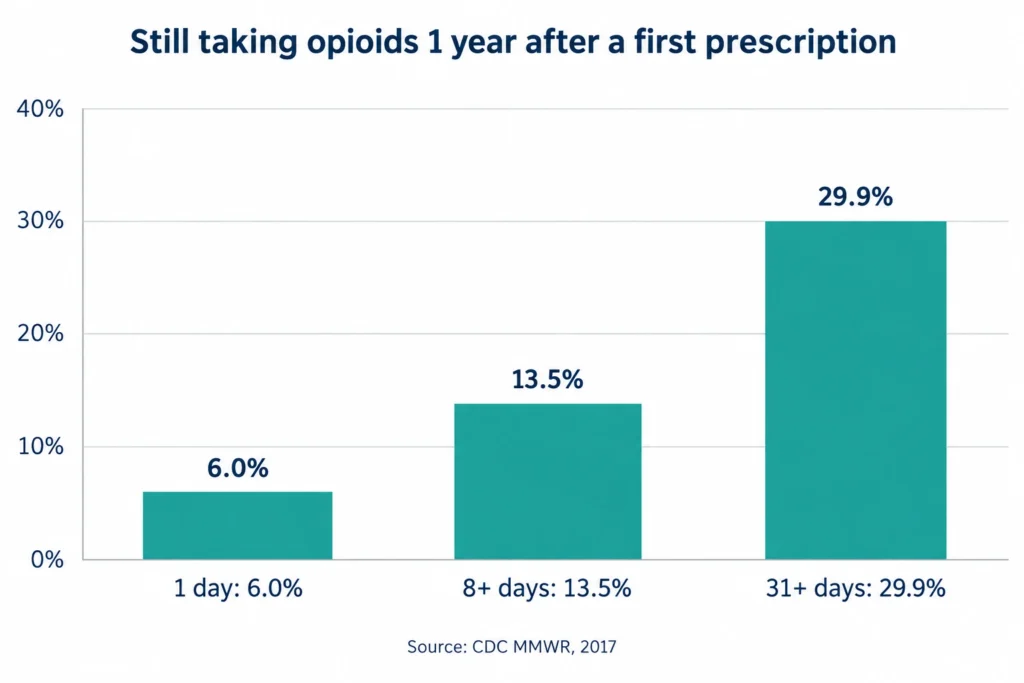
Length of use matters too. A CDC analysis of 2006 to 2015 insurance data found that the chance of still taking opioids a year later rose most sharply after day 5 of a first prescription.
| Length of first opioid prescription | Still taking opioids 1 year later |
| At least 1 day | 6.0% |
| 8 days or more | 13.5% |
| 31 days or more | 29.9% |
Source: CDC, Morbidity and Mortality Weekly Report, Shah and colleagues, March 2017.
Long-term use isn’t the same as addiction, but it gives tolerance and dependence more time to build. If someone in your family takes oxycodone after surgery or for an injury, ask the prescriber whether a shorter supply would cover the pain.
Life matters as well. NIDA lists stress, early exposure to drugs, and physical or sexual abuse among the environmental factors that raise the risk of addiction. None of these decides anything alone, but they add up.
Is Physical Dependence The Same As Addiction?
No. Dependence means the body has adapted and goes into withdrawal without the drug. Addiction, which doctors call opioid use disorder, means compulsive use that continues despite harm.
Someone taking opioids for cancer pain can be dependent without being addicted. When opioids are taken as prescribed under medical care, doctors don’t count tolerance or withdrawal toward an OUD diagnosis. They look for other signs.
• Using more, or for longer, than intended
• Wanting to cut down but not managing to
• Spending a great deal of time getting, using or recovering
• Strong cravings
• Falling behind at work, school or home because of use
• Using in situations where it isn’t safe
A diagnosis needs at least 2 of 11 signs within 12 months. The more signs a person has, the more severe the disorder.
Why Stopping Suddenly Can Be Dangerous
Tolerance fades fast after someone stops. If they go back to their old dose, that amount can now kill them.
MedlinePlus, from the National Library of Medicine, notes that most opiate overdose deaths happen in people who have recently detoxed. A BMJ review of 19 cohort studies found that the period right after leaving methadone or buprenorphine treatment carries a sharply higher risk of death. Outside methadone treatment, the death rate was about 3 times the rate in treatment.
We say the tolerance warning out loud at discharge, write it into the summary for each patient’s own doctor, and repeat it on the first follow-up call. It applies to any detox, not only ours. If you’re thinking about stopping Suboxone or methadone, plan it with the prescriber instead of going it alone.
Keep naloxone at home if anyone in the house uses opioids. NIDA notes that it’s sold over the counter as a nasal spray and that anyone can give it. If you think someone is overdosing, call 911 and give naloxone if you have it.
How Opioid Addiction Is Treated
Medication is the standard of care. NIDA lists 3 FDA-approved medicines for OUD, methadone, buprenorphine and naltrexone, and says they lower the risk of return to use and of overdose death.
Methadone and buprenorphine steady the same receptors opioids use, which eases withdrawal and craving. Naltrexone blocks those receptors, so opioids have little effect. Behavioral therapy works best alongside medication.
Yet in 2025, only about 1 in 6 people with OUD got any of these medicines. If methadone or buprenorphine is working for you, stay on it. We usually say the same thing on screening calls.
Our clinic offers ibogaine for opioid addiction in Mexico City for people who want another route. It isn’t FDA approved, it carries real heart risk, and we decline more people than we accept.
The science on ibogaine and the brain is still early, and FDA is only now drafting how the first US trials should work. Anyone who calls it a cure is selling something.
Knowing what makes opioids so addictive explains why quitting takes more than willpower. SAMHSA’s National Helpline, 1-800-662-4357, is free and open 24 hours a day, 7 days a week. If you’d like to know whether you’d be a candidate here, a free screening call with a physician or nurse comes before any payment.
FAQs
What makes opioids so addictive?
Opioids trigger a large dopamine spike in the brain’s reward system, which teaches the brain to repeat the drug. Repeated use then builds tolerance and dependence, so stopping causes withdrawal. Over time, a person with addiction often uses it mainly to avoid withdrawal.
How long does it take to get addicted to opioids?
There’s no set timeline, and it varies from person to person. A CDC analysis found that the chance of still taking opioids a year after a first prescription rose most sharply after day 5 and reached 29.9% when the first prescription lasted 31 days or more. Long-term use isn’t the same as addiction, but it gives tolerance and dependence time to build.
Is fentanyl more addictive than other opioids?
Fentanyl is 50 to 100 times more potent than morphine and acts faster, and even a small amount can be fatal. It’s also often hidden in fake pills and other drugs. Any opioid can lead to addiction, but fentanyl leaves far less room for error.
Can you get addicted to opioids taken as prescribed?
Yes. CDC says anyone who takes prescription opioids can develop opioid use disorder, and NIDA notes that tolerance can build even when opioids are taken as prescribed. Using the lowest dose for the shortest time, and talking openly with the prescriber, lowers the risk.
What is the difference between opioid dependence and addiction?
Dependence means the body has adapted to the drug and goes into withdrawal without it. Addiction, or opioid use disorder, means compulsive use that continues despite harm and is diagnosed when a person shows at least 2 of 11 signs. A person can be dependent on prescribed opioids without being addicted.
Why is relapse after quitting opioids so dangerous?
Tolerance drops quickly after someone stops, so a dose they once handled can now cause a fatal overdose. MedlinePlus notes that most opiate overdose deaths happen in people who have recently detoxed. Keeping naloxone at home and planning any taper with a clinician lowers that risk.
How many people have opioid use disorder in the US?
SAMHSA’s 2025 National Survey on Drug Use and Health counted 4.0 million people aged 12 and older with opioid use disorder. Only 15.7% of them, about 623,000 people, received medication for it in the past year.
This article is information, not medical advice. Ibogaine is not approved by the FDA and carries cardiac risk. Whether it is an option for you is decided by a physician after an EKG and blood tests, never by an article. If you or someone else is in danger now, call your local emergency number.