Opioid treatment medication means 1 of 3 FDA-approved drugs: methadone, buprenorphine or naltrexone. Methadone and buprenorphine have the strongest evidence, and the World Health Organization guideline tells clinicians to advise one of them for most patients. Naltrexone blocks opioids, but it’s meant to start only after someone has gone 7 to 10 days without them.
Most people who need these drugs don’t get them. In 2025, 4.0 million people in the US aged 12 and older had opioid use disorder, and 15.7% of them received one of these medications, according to SAMHSA’s 2025 survey. Opioids were involved in 44,564 of the 69,973 overdose deaths the CDC estimated for that year.
Ibogaine isn’t on that list. The DEA lists it in Schedule I, and its clearest evidence is for getting people through withdrawal, not for keeping them off opioids. We run an ibogaine clinic in Mexico City, and we still tell families to try methadone or buprenorphine first if their person never has.
What Is Opioid Treatment Medication?
Opioid treatment medication is a prescription drug used to treat opioid use disorder. Methadone and buprenorphine act on the same brain receptors as heroin and fentanyl, which calms withdrawal and cravings. Naltrexone blocks those receptors, so a usual opioid dose has no effect. Doctors call this approach MOUD, short for medications for opioid use disorder.
The word “dependence” trips up families. Someone who takes a prescribed painkiller exactly as directed can be physically dependent without having opioid use disorder. That person usually needs a slow taper with their own prescriber instead of any option on this page.
How The 3 Medications Compare
Methadone keeps the most people in treatment. Buprenorphine is easier to get, and naltrexone only suits people who are already off opioids. The table adds lofexidine, which eases withdrawal symptoms, and ibogaine, which has no approved use in the US.
| Option | What it does | How it’s given | US status | Main catch |
| Methadone | Full opioid agonist that stops withdrawal and cravings | Daily liquid, with take-home doses once stable | FDA-approved; only certified opioid treatment programs can dispense it for this use | Daily clinic visits at first; can lengthen the heart’s QT interval |
| Buprenorphine | Partial agonist with a ceiling on its opioid effect | Daily film or tablet, or a weekly or monthly shot | FDA-approved; any clinician with a standard DEA registration can prescribe it | A first dose too soon after fentanyl can trigger sudden withdrawal |
| Naltrexone (Vivitrol) | Blocks opioid receptors | Monthly shot | FDA-approved for opioid dependence since 2010 | Needs 7 to 10 opioid-free days first; overdose risk if doses stop |
| Lofexidine (Lucemyra) | Eases withdrawal symptoms without an opioid | Tablets for up to 14 days | FDA-approved in 2018 for withdrawal symptoms | The FDA says it isn’t a treatment for opioid use disorder |
| Ibogaine | Plant alkaloid studied mainly for withdrawal | Supervised dosing after cardiac screening | Schedule I; not FDA-approved | Heart rhythm risk; no placebo-controlled trial published |
Methadone: the most studied, the most rules
Methadone has the longest track record. In the trials the WHO reviewed, people on methadone were about 3 times as likely to stay in treatment as people offered withdrawal instead, and about a third as likely to keep using illicit opioids. Federal rules let only certified opioid treatment programs hand it out for this use, so most people start with daily clinic visits.
It can also slightly lengthen the heart’s QT interval, and ibogaine lengthens it too. That’s why our physicians never dose ibogaine while methadone is still in the body, and why coming off methadone takes a planned switch measured in weeks.
Buprenorphine: easier to get, now a shot too
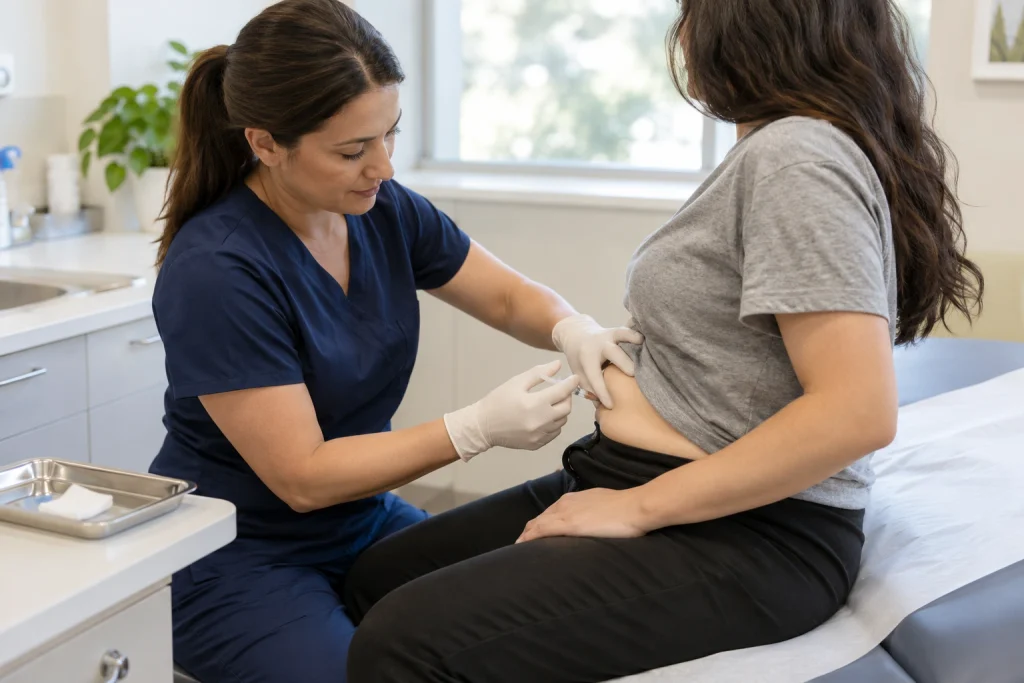
Buprenorphine is a partial agonist, so its opioid effect levels off at higher doses, though it can still be deadly mixed with alcohol or sedatives like benzodiazepines. Since Congress ended the federal waiver at the end of 2022, any clinician with a standard DEA registration for Schedule III drugs can prescribe it. In May 2023 the FDA approved Brixadi, a weekly or monthly shot given only in a health care setting.
If someone is doing well on it, staying is usually the safer choice. We turn away stable patients who have no medical reason to stop, because death rates peak in the first month after leaving Suboxone or methadone.
Naltrexone: a monthly block after detox
Naltrexone blocks opioid receptors instead of activating them. The monthly shot, Vivitrol, was approved for opioid dependence in 2010, to prevent relapse after detox. Its label recommends at least 7 to 10 days without opioids before the first dose, and up to 2 weeks for people coming off methadone or buprenorphine.
That gap is hard to get through without help, and starting too soon brings on sudden, severe withdrawal. The label also reports fatal overdoses in people who used opioids after a missed dose or after stopping.
Why Detox Alone Rarely Holds
Detox treats withdrawal, and withdrawal is the shortest part of the problem. The WHO guideline says assisted withdrawal doesn’t work as a treatment on its own because relapse is so common, and a 2009 review of opioid pharmacotherapy by Stotts, Dodrill and Kosten found most patients relapse during or after detox.
Medicines can make withdrawal easier to finish. The WHO recommends tapering doses of methadone or buprenorphine as the usual approach. Lofexidine, approved in May 2018 as the first non-opioid drug for withdrawal symptoms, can be used for up to 14 days, and the FDA says it isn’t a treatment for opioid use disorder.
Whatever the method, tolerance falls within days. A dose someone used to handle can stop their breathing, and overdose deaths cluster in the weeks after detox for that reason.

A Faster Detox Isn’t A Better One
How fast withdrawal ends doesn’t tell you who stays off opioids. When researchers tested one of the fastest detox methods, done under general anesthesia, it didn’t beat slower ones.
In a 2005 JAMA trial, Columbia University researchers randomly assigned 106 people with heroin dependence to anesthesia-assisted, buprenorphine-assisted or clonidine-assisted detox. After 12 weeks, 20%, 24% and 9% were still in treatment, and the gaps were too small to rule out chance. Only the anesthesia group had potentially life-threatening events, 3 of them.
A Cochrane review of anesthesia detox trials, which the WHO guideline relies on, found no difference in heroin use 6 months later. The guideline tells clinicians not to use the method at all.
Ibogaine is often sold on speed: 1 dose, and withdrawal is over. Withdrawal relief is the most consistent finding in ibogaine research, but the anesthesia trial shows why speed isn’t the outcome that counts. Judge any clinic, ours included, by what happens in the 90 days after the dose.
Our follow-up calls run weekly through day 30, then on days 45, 60 and 90. We don’t publish a success rate, because nobody in this field can prove one to a standard we’d accept.

What Fentanyl Changes
Fentanyl makes the first days of any treatment harder. After daily use it can linger in the body, so a first buprenorphine dose taken too soon can set off sudden withdrawal.
New York’s addiction agency, OASAS, flags that exact problem for prescribers and points them to newer ways to start buprenorphine, including low-dose starts. If a first try went badly, ask a prescriber about a different start before ruling the medicine out.
Fentanyl also needs a longer washout before ibogaine than heroin does, so our screening asks what someone has been buying and in what form. Either way, keep naloxone at home: the FDA approved the first over-the-counter naloxone nasal spray in March 2023.
A Decision Path Based On What’s Been Tried
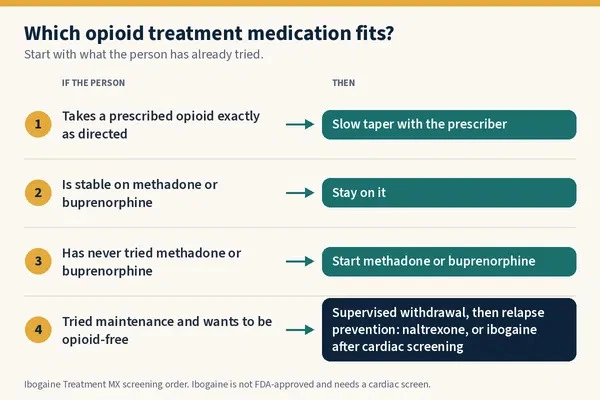
Start with what the person has already tried. This is the order our screening follows, and it’s built from the rules on our treatment pages.
- Taking a prescribed opioid exactly as directed. That’s physical dependence, and the answer is a slow taper with the prescriber. No clinic, ours included, should be the first stop.
- Stable on methadone or buprenorphine. Stay on it. We turn these patients away unless there’s a medical reason to stop.
- Never tried methadone or buprenorphine. Start there, because they have the strongest evidence. Someone who doesn’t do well on them can change course later.
- Tried maintenance and wants to be opioid-free. This is where supervised withdrawal plus relapse prevention makes sense. That can mean supervised withdrawal with lofexidine for symptoms and then monthly naltrexone, or ibogaine for someone who passes cardiac screening and has a plan for the 90 days after.
How To Find A Prescriber
Start with a primary care doctor or SAMHSA’s treatment locator, FindTreatment.gov. Any clinician with a standard DEA registration can now prescribe buprenorphine, while methadone for this use comes only from certified opioid treatment programs.
SAMHSA’s National Helpline, 1-800-662-4357, is free and confidential and answers 24 hours a day, 365 days a year, in English and Spanish. It gives treatment referrals and information to people with a substance use disorder and to their families.
Where Ibogaine Fits, And Where It Doesn’t
Ibogaine fits step 4 only, and only after a physician clears the heart. The DEA lists it in Schedule I and the FDA hasn’t approved it, so people in the US who choose it travel to clinics abroad.
The evidence is thin. The best-known outcome study followed 30 people treated at 2 clinics in Baja California, with no control group, and no placebo-controlled trial has been published. On October 5, 2026, the FDA asked for public input on early ibogaine trials in adults with opioid use disorder or PTSD, proposing a starting dose of no more than 10 mg/kg and monitoring for heart and nerve problems.
Our screening ends at noon when an EKG or labs rule someone out, and at not yet when methadone or buprenorphine is still on board. The program price is $12,500 for 7 days plus 90 days of follow-up, screening costs nothing, and you get a full refund if we decline you at any point. Flights aren’t included, and neither are the pre-screening EKG and labs, which go through your own doctor.
We treat ibogaine for opioid addiction as a way through withdrawal for a narrow group of people, and we don’t promise anyone stays off opioids. The 90 days after the dose decides whether it was worth it.
What Each Option Costs
Methadone and buprenorphine cost about $6,000 to $6,600 a year in a certified program, by federal estimates. Monthly naltrexone costs more than twice that.
NIDA’s figures, which come from Department of Defense estimates and carry no date on its page, put a year in a certified program at $6,552 for methadone with daily visits, $5,980 for buprenorphine with twice-weekly visits and $14,112 for monthly naltrexone. Coverage varies by plan, so check with the insurer before the first visit.
Ibogaine is a one-time cost by comparison, and it isn’t FDA-approved, so plan on paying it yourself. The numbers don’t compare cleanly, because the WHO advises treating maintenance as open-ended, while ibogaine is 1 episode that still needs a plan after it.
If you’re weighing opioid treatment medication against ibogaine for someone you love, start a screening with 3 questions. A physician or nurse replies within 1 business day, and nothing is billed before screening.
Questions Families Ask About Opioid Treatment Medication
Which opioid treatment medication works best?
Methadone and buprenorphine have the strongest evidence. In the trials the WHO reviewed, people on methadone were about 3 times as likely to stay in treatment as people offered withdrawal instead. The better choice depends on access, past response and whether fentanyl is involved.
Does opioid treatment medication replace one drug with another?
No. Methadone and buprenorphine are taken at steady doses from a prescriber, which breaks the cycle of withdrawal and use. The WHO found people on maintenance were more likely to stay alive, avoid heroin and stay in contact with treatment than people not in that treatment.
How long do people stay on methadone or buprenorphine?
As long as it’s working. The WHO advises treating it as open-ended, because stopping is linked to relapse and longer treatment does better than short courses. Any plan to stop should be made with the prescriber, including what happens in the first month after.
Do you have to detox before starting naltrexone?
Yes. Vivitrol’s label recommends at least 7 to 10 days without opioids first, and up to 2 weeks for people coming off methadone or buprenorphine. Starting sooner can bring on sudden, severe withdrawal.
Does buprenorphine work for people who use fentanyl?
Yes, but the start is harder. A first dose taken too soon after fentanyl can set off sudden withdrawal, so prescribers now use low-dose starts and other methods to avoid it. If the first try went badly, ask about a different start before ruling it out.
Is ibogaine legal or FDA-approved in the US?
No. The DEA lists ibogaine in Schedule I, and the FDA hasn’t approved it for any use. In October 2026, the FDA asked for public input on how to design early trials, with comments due November 20, 2026.
References
- Substance Abuse and Mental Health Services Administration. Key Substance Use and Mental Health Indicators in the United States: Results From the 2025 National Survey on Drug Use and Health. Publication PEP26-07-010, NSDUH Series H-61. Substance Abuse and Mental Health Services Administration; 2026. https://www.getsmartaboutdrugs.gov/sites/default/files/2026-07/2025-NSDUH.pdf
- National Center for Health Statistics. U.S. overdose deaths decrease for third consecutive year in 2025. Press release. Centers for Disease Control and Prevention. May 13, 2026. https://www.cdc.gov/nchs/pressroom/releases/20260513.html
- World Health Organization. Guidelines for the Psychosocially Assisted Pharmacological Treatment of Opioid Dependence. World Health Organization; 2009. Chapter 6. https://www.ncbi.nlm.nih.gov/books/NBK143171/
- Stotts AL, Dodrill CL, Kosten TR. Opioid dependence treatment: options in pharmacotherapy. Expert Opin Pharmacother. 2009;10(11):1727-1740. doi:10.1517/14656560903037168
- Collins ED, Kleber HD, Whittington RA, Heitler NE. Anesthesia-assisted vs buprenorphine- or clonidine-assisted heroin detoxification and naltrexone induction: a randomized trial. JAMA. 2005;294(8):903-913. doi:10.1001/jama.294.8.903
- Sordo L, Barrio G, Bravo MJ, et al. Mortality risk during and after opioid substitution treatment: systematic review and meta-analysis of cohort studies. BMJ. 2017;357:j1550. doi:10.1136/bmj.j1550
- Brown TK, Alper K. Treatment of opioid use disorder with ibogaine: detoxification and drug use outcomes. Am J Drug Alcohol Abuse. 2018;44(1):24-36. doi:10.1080/00952990.2017.1320802
- Drug Enforcement Administration. Dear registrants letter: elimination of the DATA-Waiver (X-waiver) program. January 12, 2023. https://www.deadiversion.usdoj.gov/pubs/docs/A-23-0020-Dear-Registrant-Letter-Signed.pdf
- US Food and Drug Administration. FDA approves new buprenorphine treatment option for opioid use disorder. Press release. May 23, 2023. https://www.fda.gov/news-events/press-announcements/fda-approves-new-buprenorphine-treatment-option-opioid-use-disorder
- Alkermes. VIVITROL (naltrexone for extended-release injectable suspension) prescribing information. Accessed October 12, 2026. https://labeling.alkermes.com/uspi_vivitrol.pdf
- US Food and Drug Administration. FDA approves the first non-opioid treatment for management of opioid withdrawal symptoms in adults. Press release. May 16, 2018. https://www.fda.gov/news-events/press-announcements/fda-approves-first-non-opioid-treatment-management-opioid-withdrawal-symptoms-adults
- New York State Office of Addiction Services and Supports. Medications for the treatment of opioid use disorder. Accessed October 12, 2026. https://oasas.ny.gov/providers/medications-treatment-opioid-use-disorder
- US Food and Drug Administration. FDA approves first over-the-counter naloxone nasal spray. Press release. March 29, 2023. https://www.fda.gov/news-events/press-announcements/fda-approves-first-over-counter-naloxone-nasal-spray
- Drug Enforcement Administration, Diversion Control Division. Controlled substances, alphabetical order. August 27, 2026. https://www.deadiversion.usdoj.gov/schedules/orangebook/c_cs_alpha.pdf
- US Food and Drug Administration. FDA seeks public input to support ibogaine research. Press release. October 5, 2026. https://www.fda.gov/news-events/press-announcements/fda-seeks-public-input-support-ibogaine-research
- National Institute on Drug Abuse. How much does opioid treatment cost? In: Medications to Treat Opioid Use Disorder Research Report. Accessed October 12, 2026. https://nida.nih.gov/publications/research-reports/medications-to-treat-opioid-addiction/how-much-does-opioid-treatment-cost
- Drug Enforcement Administration. Support. Fentanyl Free America. Accessed October 12, 2026. https://www.dea.gov/fentanylfree/support
This article is information, not medical advice. Ibogaine is not approved by the FDA and carries cardiac risk. Whether it is an option for you is decided by a physician after an EKG and blood tests, never by an article. If you or someone else is in danger now, call your local emergency number.